
A low-cost online store can become expensive fast. Extra charges for products, payment setup, shipping, SEO or small updates can quickly push the final cost well beyond the original quote. That is why Australian businesses should compare ecommerce website design packages by what is actually included, not just the starting price. The right package should make it easy for customers to find products, complete checkout, and understand what happens next.
Introduction
It should also make daily management simple for the business. Staff should be able to update products, orders, stock, and promotions without relying on a developer for every small change. The best value usually comes from a package that balances design, usability, ecommerce features, and long-term control.
What Are Ecommerce Website Design Packages
Ecommerce website design packages bring together the key services needed to build an online store. Depending on the provider, this may include product setup, payment integration, mobile design, checkout configuration, inventory tools, SEO and post-launch support.
The important point is that packages can vary widely. One may cover only basic setup, while another includes more products, custom features, and ongoing support. Businesses should compare what is actually included rather than assuming every package offers the same value.
An ecommerce store also needs to support more than the shopping cart. It should connect products, payments, stock, and orders in a way that is practical for both customers and staff. The online store setup service shows how package scope can vary based on product numbers and included setup requirements.
Why Ecommerce Website Design Matters for Australian Businesses
An ecommerce store needs to support customers from product discovery through checkout. Key areas Australian businesses should plan for include:
- Mobile usability: customers should be able to browse and buy easily on any device.
- Clear navigation: categories, product pages and delivery information should be simple to understand.
- Checkout experience: payment and checkout steps should be quick and straightforward.
- Australian requirements: consider GST, shipping zones, returns and local payment options.
- Future scale: a store with 20 products needs a different setup from one managing hundreds or thousands.
The website design services guide for Australian businesses explains how website requirements can change as a business grows and becomes more complex.
Basic, Growing and Advanced Ecommerce Stores
The right package depends on how complex the business needs to manage.
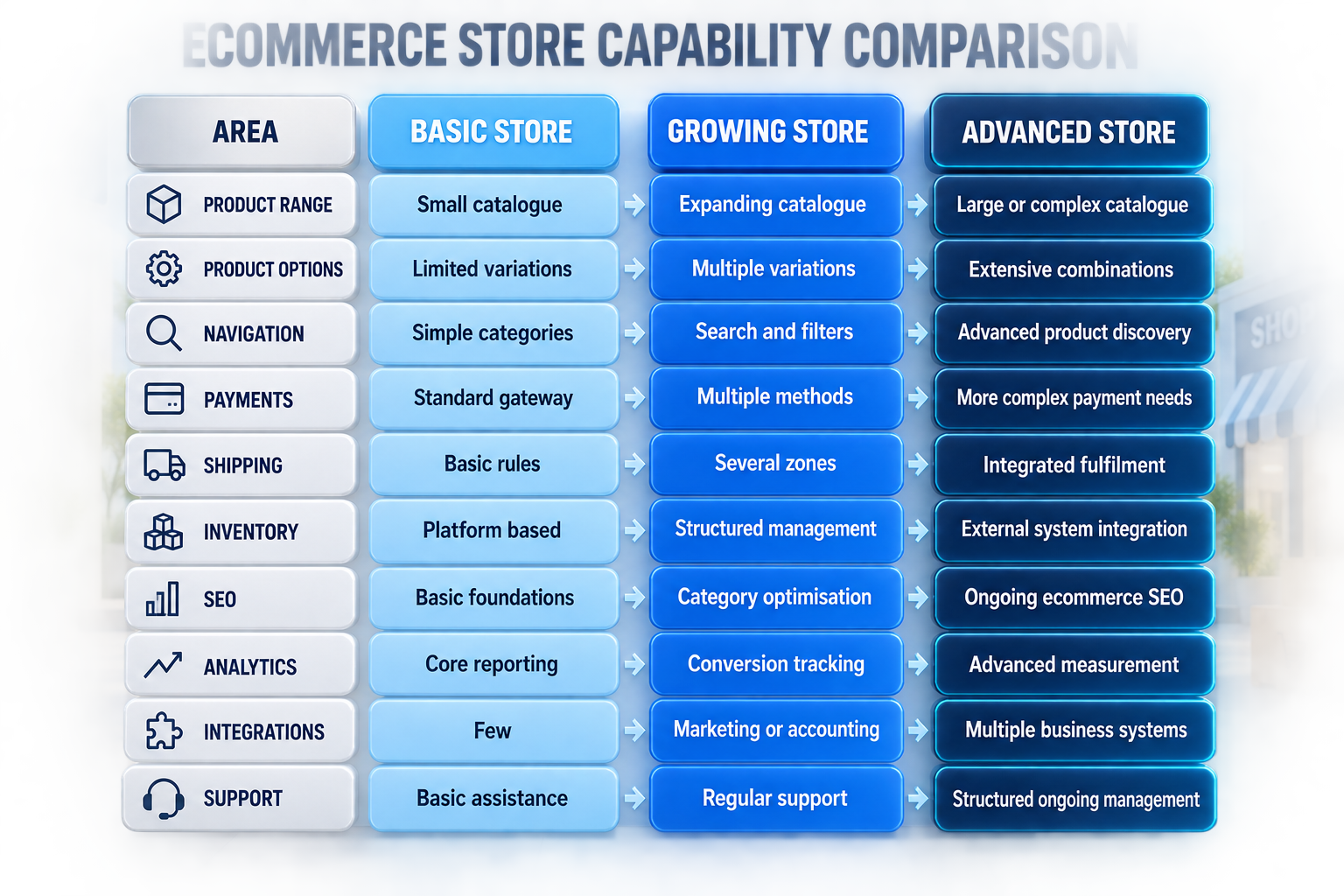
A smaller business does not need every advanced capability on launch day. It should still avoid a package that creates unnecessary barriers when the store starts growing.
Top 10 Features Australian Businesses Should Compare
Platform Choice and Business Ownership
The platform shapes how the store is managed, expanded and maintained. Shopify, WooCommerce and other platforms differ in hosting, extensions, integrations and day-to-day control. Ownership matters just as much. Confirm who controls the domain, administrator access, product data, design files and paid licences. Businesses should avoid becoming dependent on a provider for basic access to their own store. Businesses reviewing their online identity can also consider domain registration and management.
Mobile Shopping and Product Discovery
A mobile-friendly store should do more than resize desktop pages. Customers need to browse products, use filters, read details, and complete checkout comfortably on the phone. As the product range grows, navigation becomes more important. Larger stores may need stronger search, filtering, and category structures. The professional online store guide provides more detail on ecommerce navigation and design.
Product Pages That Build Confidence
Product pages should answer the questions customers have before buying. Clear images, specifications, variations, availability, and delivery details can make decisions easier. Staff should also be able to update these pages without unnecessary developer support. A good package should make routine product changes simple.
Checkout and Payment Integration
A complicated checkout can lose customers quickly. Buyers should clearly see their order, delivery costs, and payment options before completing the purchase. Confirm which payment gateways are included and whether setup and testing are part of the package. Tax settings, shipping calculations, and order confirmations should also be checked before launch.
Test orders are essential. A payment button is not enough if the full transaction process has not been tested.
Inventory and Order Management
The store should support the way the business actually manages stock. Smaller retailers may work directly inside the ecommerce platform, while larger businesses may need connections to inventory or fulfilment systems.
Order management should also be clear. Staff need a simple way to process orders, update statuses, issue refunds, and keep customers informed.
SEO Foundations From Day One
SEO should be considered during the build, not added as an afterthought. Product URLs, categories, page titles, internal links and image optimisation all influence the store’s search foundation.
An “SEO included” label does not guarantee strong rankings. It should mean the website is built in a way that supports future optimisation. Businesses planning ongoing growth can also review SEO services for Australian businesses.
Hosting, Speed and Room to Grow
A good-looking store can still perform poorly if it loads slowly or struggles during busy periods. Hosting should support reliable performance as traffic and product numbers increase.
Ask whether hosting is included and how future growth is handled. Businesses comparing separate hosting options can review web hosting services against their expected ecommerce requirements.
Security, Backups and Recovery
Ecommerce stores handle customer activity, orders and valuable business information. Security responsibilities should therefore be clear from the start. Confirm how administrator access, updates, secure connections and backups are managed. Backups should also be tested for recovery, not simply created. Ongoing website maintenance can support updates, backups and technical checks after launch. Broader risks may also require a wider managed cyber security strategy.
Analytics and Business Integrations
An online store should provide useful information about customer behaviour. Analytics can help businesses understand traffic, product activity, checkout drop-off, and sales performance. Integrations should also be planned early. Accounting software, email marketing, inventory systems, and CRM platforms can affect both development time and cost. A low starting price may become less attractive if important integrations are charged as custom work later.
Post-Launch Support and Maintenance
Launching the store is only the beginning. Products change, promotions are updated, and software needs ongoing attention.
A package should clearly explain what happens after launch. Confirm how bug fixes, updates, backups and support requests are handled, and which changes count as additional development.
The website hosting and maintenance guide provides further guidance on ongoing website support and maintenance.
A Simple Ecommerce Website Package Example
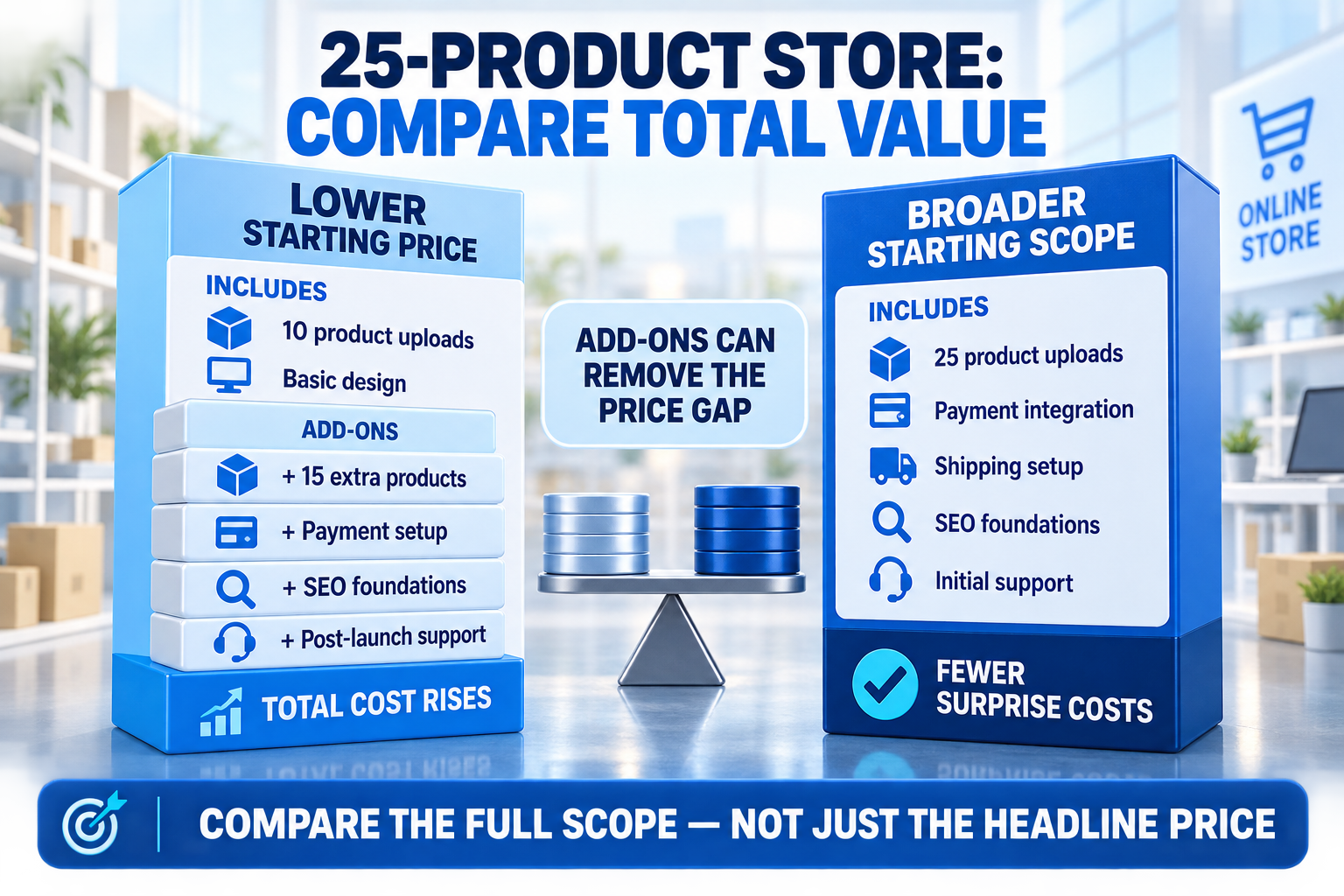
Imagine a small Australian retailer preparing to launch an online store with 25 products. Two packages look competitive, but the cheaper option covers only 10 product uploads and basic design. Payment setup, extra products, SEO and post-launch support all cost more.
The second package has a higher starting price, but it already includes the full product range, payment integration, shipping setup, SEO foundations and initial support. Once the extras are added to the cheaper option, the price difference may disappear.
The takeaway is simple: compare the full scope, not just the headline price. A package that includes the features the business actually needs can deliver better value and fewer unexpected costs later.
How Much Do Ecommerce Website Design Packages Cost in Australia
Pricing varies because ecommerce projects can differ significantly in size and complexity.
IT Company Australia’s public online-store page currently lists three one-time packages. The prices were checked on 23 September 2026.
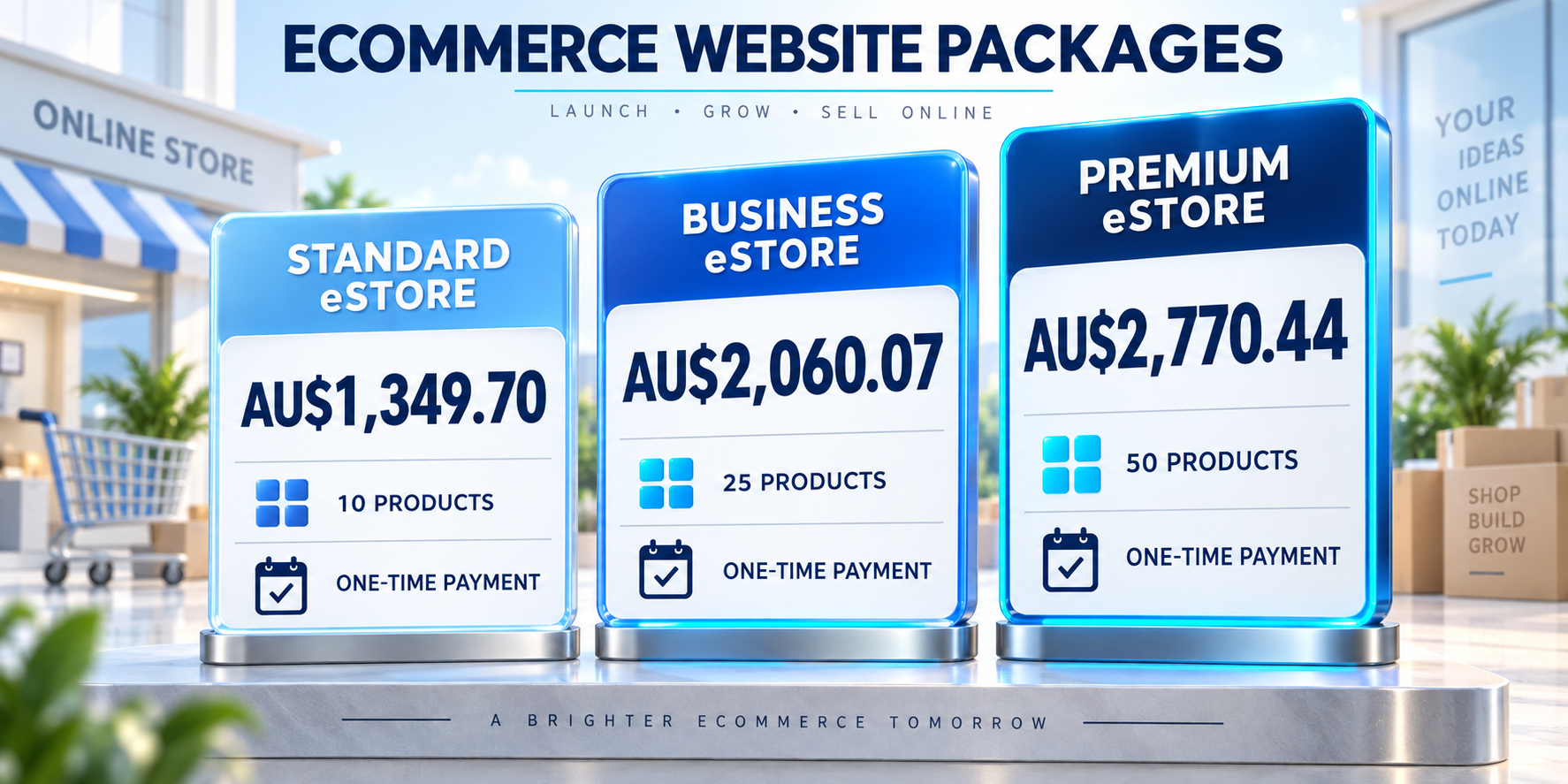
The page lists an online storefront, order-testing functionality and multi-channel selling across these plans. Product-listing limits increase from 10 to 25 and 50 respectively.
The public page does not clearly state the GST treatment beside these displayed prices, so Australian businesses should confirm GST before purchasing. They should also verify whether payment-gateway charges, platform subscriptions, premium extensions, content preparation and ongoing maintenance are included or billed separately.
This is why ecommerce website design packages should be compared by complete scope rather than price alone.
Think About Total Cost of Ownership
A useful comparison includes more than the initial build. For most businesses, the total cost can involve website building, platform fees, hosting, paid extensions, maintenance, and future development.
A lower upfront price may still cost more over several years if the store requires repeated paid customisations. A slightly higher initial build may offer better value when important functionality is already included.
How to Compare Ecommerce Website Designers
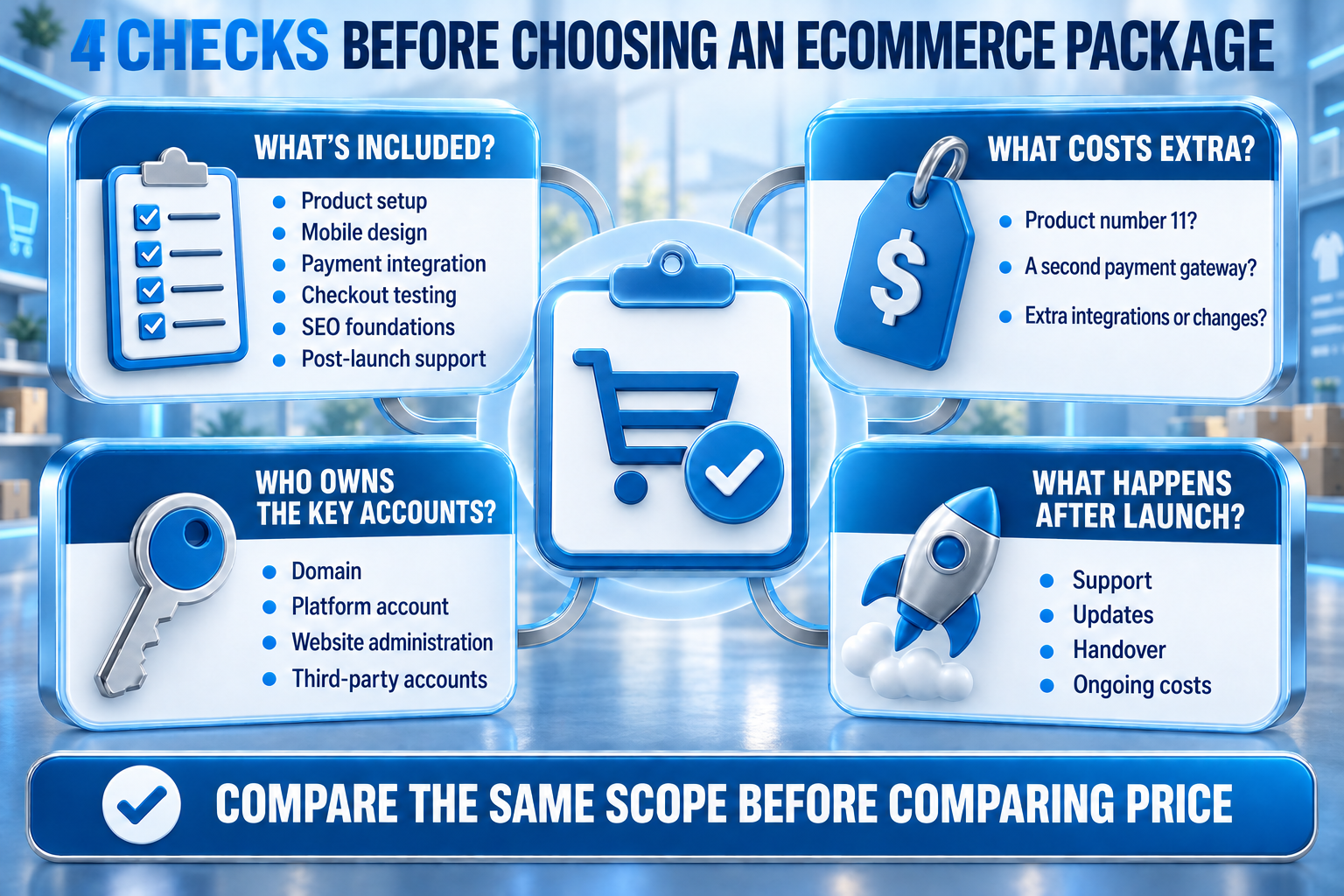
Planning for Long-Term Ecommerce Success
An ecommerce website should be built with future growth in mind, not just the initial launch. As product ranges, traffic and customer expectations increase, the store may need stronger hosting, better SEO, additional payment options and ongoing maintenance. Planning for these requirements early can reduce unnecessary redevelopment later.
Businesses should also clarify ownership, support responsibilities and security before choosing a long-term provider. Where relevant, governance credentials such as ISO/IEC 27001:2022 can form part of that assessment, alongside the actual service scope and contractual responsibilities.
For businesses operating across Australia, ITCompany Sydney may be relevant for Sydney-based enquiries, while ITCompany Melbourne, ITCompany Brisbane and ITCompany Perth can be considered for other locations. Local availability, onsite support and response arrangements should always be confirmed before the project begins.
Frequently Asked Questions
What Should Ecommerce Website Design Packages Include?
A useful package should clearly define design, product setup, mobile responsiveness, checkout, payment integration, testing and post-launch responsibilities.
More complex stores may also require inventory integration, advanced search, custom workflows and ongoing maintenance.
How Much Does an Ecommerce Website Cost in Australia?
The price depends on catalogue size, design complexity, integrations and ongoing support requirements. IT Company Australia currently advertises one-time online-store packages ranging from AU$1,349.70 to AU$2,770.44, with different product-listing limits. Businesses should confirm GST and additional platform or service costs before purchasing.
Is Shopify or WooCommerce Better?
Neither platform is automatically the right choice for every Australian business. The decision should consider hosting, administration, extensions, product complexity, integrations, and the level of control the organisation wants.
Should SEO Be Included in an Ecommerce Package?
The website should at least have a technically sound SEO foundation.
Businesses that want ongoing organic growth may need separate SEO services for research, optimisation and content development.
Do Ecommerce Websites Need Ongoing Maintenance?
Yes. Ecommerce stores usually need ongoing technical attention because software, products, integrations and payment systems change after launch. The amount of maintenance depends on the platform, store complexity, and how frequently the website changes.
Should Hosting Be Included?
Hosting may be included in the package or supplied separately. Businesses should know who manages it, what resources are provided, and who responds if performance or availability problems occur.
Can an Existing Website Be Converted Into an Online Store?
Sometimes. The existing platform, design, and hosting environment first need to be assessed. In some cases, adding ecommerce functionality is practical. In others, rebuilding a more suitable platform can be more efficient.
What Should I Ask Before Choosing an Ecommerce Website Designer?
Ask about platform ownership, product limits, payment setup, integrations, SEO, testing and post-launch support. Also confirm exclusions and the cost of work that falls outside the initial package.
Final Thoughts
Choosing between ecommerce website design packages should be a comparison of business capability rather than attractive screenshots or the lowest headline price. A smaller Australian retailer may need a straightforward product catalogue, reliable payments and easy administration. A growing store may need better search, stronger analytics, and more integration. A complex operation may require inventory of connections, customised workflows, and structured ongoing support.
The most useful package is one that fits how the business actually sells, manages orders, and plans to grow. Platform ownership, mobile usability, product management, checkout, SEO, hosting, security and post-launch responsibilities should all be clear before a contract is signed.
Australian businesses planning a new ecommerce store or reviewing an existing one can contact IT Company Australia to discuss a scope based on their catalogue, integrations and operating requirements.
