

Expanding a website into another country sounds straightforward. Add a new market, translate a few pages, change the currency and start targeting international keywords. Then something unexpected happens.
Introduction
The Australian pages continue ranking overseas. The new international pages struggle to appear. Google indexes the wrong version of important pages, while customers land on content written for another market.
This is where international SEO audits become valuable. The twist is that international SEO problems are not always caused by poor translation or missing keywords. A website can look perfectly organised to a customer while sending confusing signals to search engines behind the scenes.
A strong audit asks a more useful question:
Can search engines clearly understand which page belongs to which audience, language and market?
For Australian businesses expanding overseas, getting that answer right can prevent a promising international strategy from becoming a collection of competing pages.
What Is an International SEO Audit?
An international SEO audit is a structured review of how well a website supports users and search engines across different countries, regions, or languages.
It examines more than rankings. The audit may review site structure, regional URLs, hreflang, canonical tags, localisation, crawling, indexing, internal links and market-specific content.
A multilingual website and a multi-regional website are not always the same thing. A multilingual site serves content in several languages, while a multi-regional site targets users in different countries or regions. A website can also be both. Google recommends clear locale-specific URLs and appropriate signals when different language or regional versions are offered.
Australian businesses that need to strengthen the broader search foundation can also review SEO services for Australian businesses.
Why International SEO Matters for Australian Businesses
A business that performs well in Australia does not automatically have the same search visibility overseas. Customers in the United Kingdom, New Zealand, Singapore or the United States may use different terminology, compare different competitors and expect different pricing, shipping or service information.
Search engines also need to understand which version of the website should appear for each audience. Simply copying an Australian page and replacing “Australia” with another country rarely creates a strong international strategy. The page may technically target another market while still sounding as though it was written for Australian customers.
International SEO therefore sits between technical structure and genuine localisation.
The 2026 SEO services guide provides broader context on how technical SEO, content and changing search behaviour work together.
10 Checks Every International SEO Audit Should Include
Check Whether Each Market Needs Its Own SEO Strategy
Start with demand, not technical setup. Check which countries generate interest, which languages customers use, and whether the same products or services are available in each market.
Not every country needs a separate page. Create regional content only when search behaviour, terminology, pricing or service availability genuinely differs.
Review the International URL Structure
International websites may use country domains, subdomains or subdirectories.
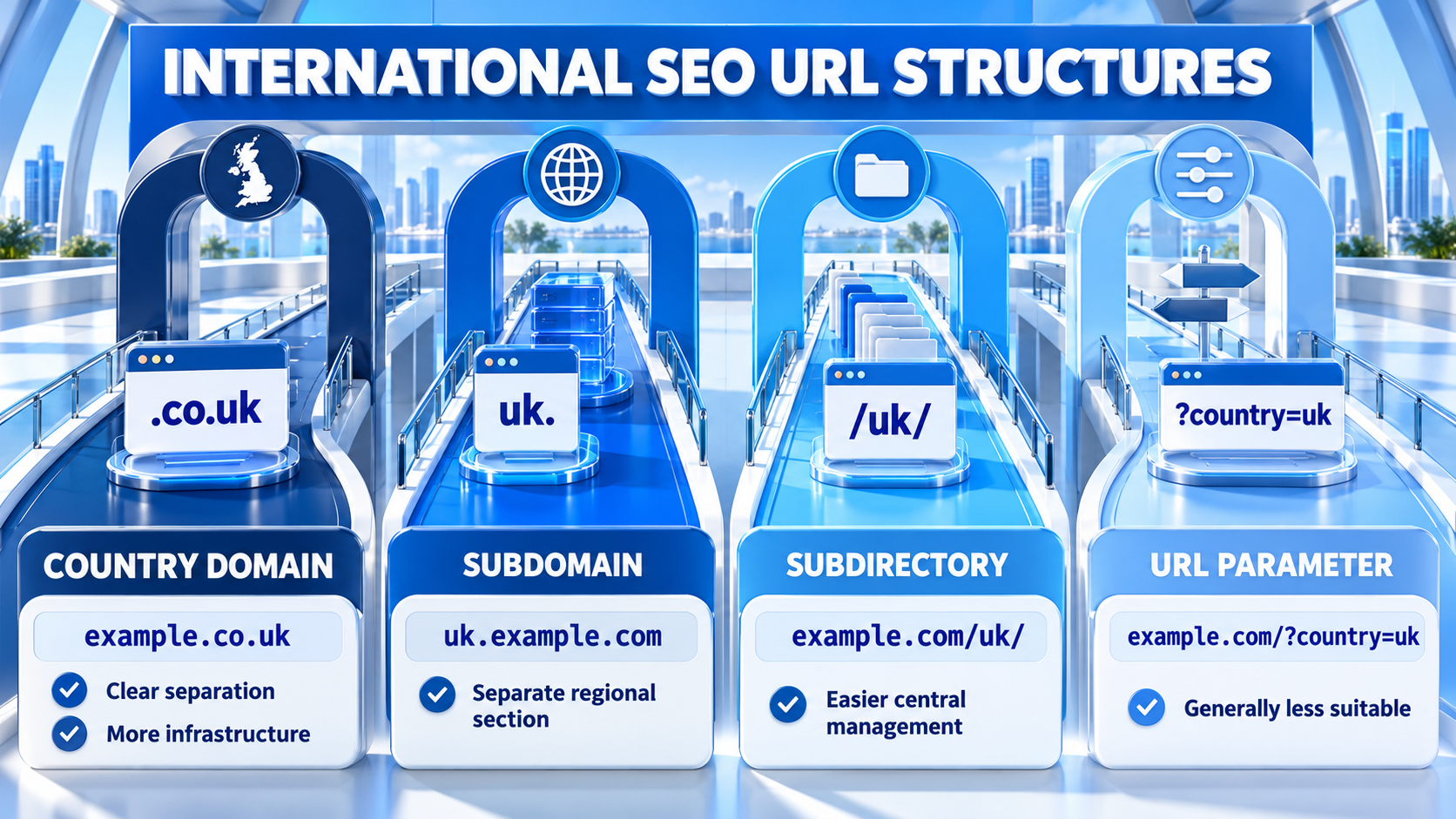
The right choice depends on the website, markets and internal resources. Businesses using several domains should also keep ownership and DNS management clear.
Audit Hreflang Carefully
Hreflang helps search engines understand which page version belongs to a particular language or region.
An audit should check for incorrect codes, broken URLs, missing return links and missing self-references. Keep the setup consistent and avoid unnecessary complexity.
Check Canonical Tags and Regional Duplicates
Regional pages can look similar, especially when they use the same language.
Canonical tags identify preferred URLs, while hreflang identifies regional alternatives. Problems appear when these signals conflict.
For example, a UK page should not accidentally tell search engines to treat the Australian version as the preferred page.
Businesses with indexing issues can also review this guide to fixing unwanted indexed URLs.
Test Whether Content Is Truly Localised
Translation changes words. Localisation adapts the content for the market.
Review terminology, spelling, currency, delivery details, product availability and examples. Keyword research should also be completed for each important market because search behaviour can differ.
The goal is simple: make the page useful for the customer in that country.
Check Crawling and Indexing for Every Locale
Regional pages must be easy for search engines to discover and index.
Review XML sitemaps, internal links, robots directives, status codes and canonical tags. Automatic language or location redirects should also be checked carefully.
Users should be able to switch regions manually, while important pages should remain accessible to search engines.
Ongoing website maintenance can help address technical problems identified during the audit.
Review International Internal Linking
Regional sections should connect logically.
Users should be able to move between relevant markets without navigating through several unnecessary pages. Internal links should also help search engines understand how country or language sections relate.
Avoid linking every regional page to every other version if it adds no value.
Check Market Signals Beyond Hreflang
Hreflang is the only international SEO signal.
Regional relevance can also come from language, currency, local contact details, country domains, and relevant links.
Keep those signals accurate. Do not invent local offices, phone numbers, or addresses simply to strengthen SEO.
Test Performance and Mobile Experience by Market
A website may load well in Australia but perform poorly overseas.
Test important pages from the regions being targeted. Large files, heavy scripts and slow server response can create a weaker experience for distant users.
Suitable web hosting services and efficient page design may help where infrastructure is limiting performance.
Mobile usability should also be checked across regional pages.
Measure Each Market Separately

The Twist: More International Pages Can Create Less Visibility
Businesses often assume that expansion means creating more country pages.
Sometimes the opposite is true.
If Australia, New Zealand, the UK and Singapore each receive near-identical pages with little local value, the website becomes harder to maintain. Hreflang mistakes multiply, internal linking becomes more complex and teams struggle to keep pricing or service details current.
A smaller number of genuinely useful regional experiences can be stronger than dozens of thin location pages.
International SEO is not about creating the most versions. It is about creating the right versions.
That is often one of the most valuable findings an audit can produce.
A Simple Australian Business Example
Imagine an Australian software company expanding into the UK and New Zealand.
The business creates /au/, /uk/ and /nz/ sections. Each version looks professional, but the audit reveals that the UK and New Zealand pages contain almost identical Australian content.
Several hreflang references are missing. Some UK pages canonicalise to Australian URLs, while the pricing page automatically redirects visitors according to location.
The solution is not simply adding more keywords.
The business first clarifies which content actually needs regional versions. It then fixes hreflang and canonical signals, makes important pages crawlable and localises the information customers genuinely care about.
This is an illustrative example, but it shows why international audits need both technical and commercial thinking.
How Much Do International SEO Audits Cost?
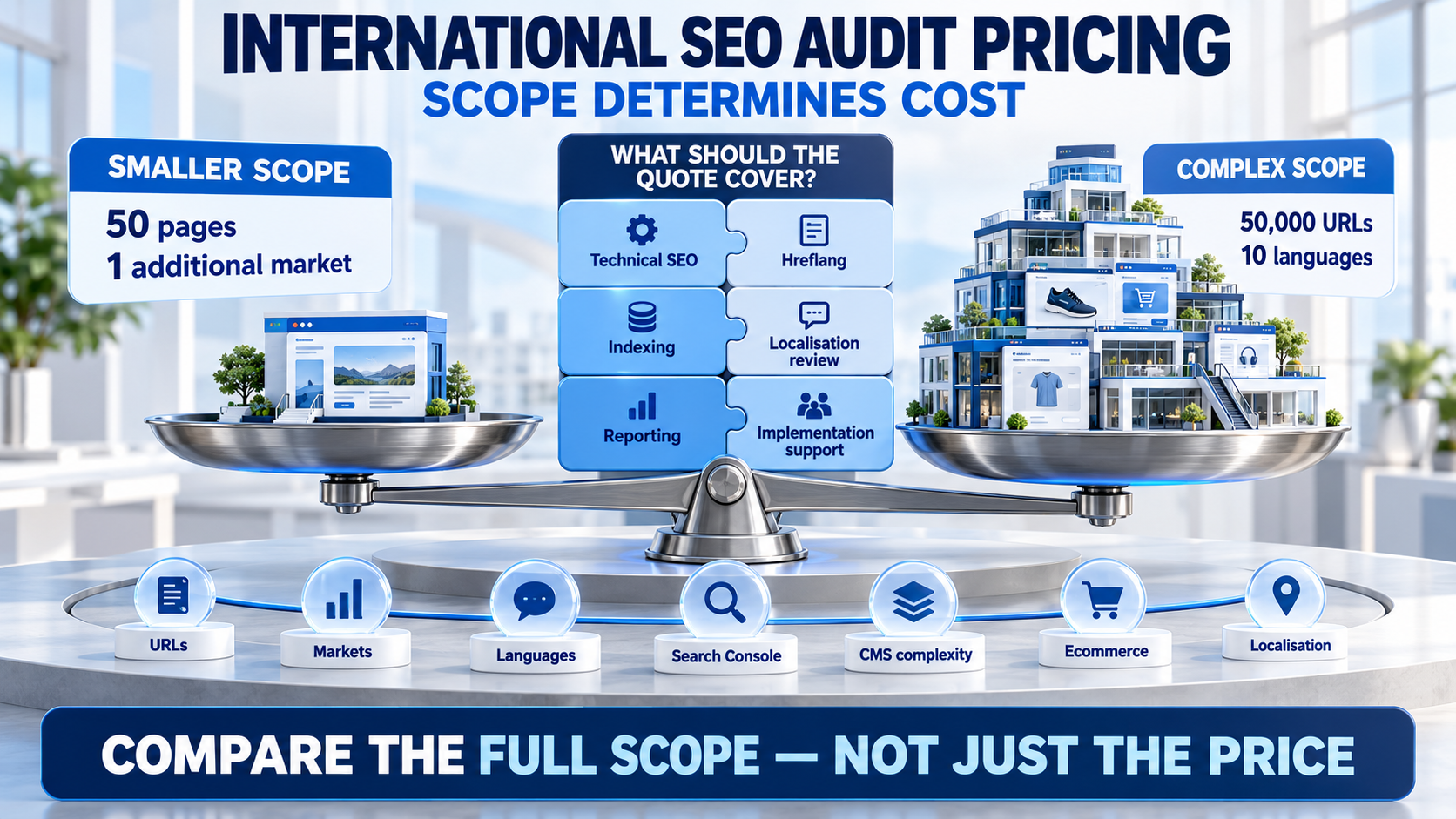
What to Check Before Choosing an International SEO Provider
International SEO combines strategy, technical work and content, so provider scope needs to be clear.
Ask whether the audit covers hreflang, canonicalisation, crawling, indexing, site architecture and localisation. Confirm whether fixes are included or whether the provider supplies recommendations only.
Website ownership matters as well. The business should retain appropriate access to domains, hosting, Search Console, analytics and CMS administration.
Where a redesign becomes part of the international expansion, professional website design may need to be considered separately from the SEO audit itself.
Australian businesses coordinating projects across different locations should also confirm where work is managed and what support is actually available. ITCompany Sydney can be referenced through the approved Sydney map listing, but project capability should still be assessed through the written scope.
The same principle applies when engaging through ITCompany Melbourne or ITCompany Brisbane. Location should not replace a clear explanation of responsibilities, reporting and implementation.
For organisations considering ITCompany Perth, confirm meeting arrangements and support expectations where international teams or time zones are involved.
Frequently Asked Questions
What Are International SEO Audits?
International SEO audits examine how well a website targets different countries, regions or languages. They usually review technical structure, regional URLs, hreflang, canonical tags, localisation, indexing and performance.
Does Every International Website Need Hreflang?
Not every website needs it. Hreflang becomes relevant when separate URLs contain language or regional versions that search engines need help distinguishing.
What Is the Difference Between International SEO and Local SEO?
International SEO focuses on countries, regions and languages across larger markets. Local SEO focuses more closely on location-based searches around specific cities or service areas.
Should Australian Businesses Use Separate Country Domains?
Sometimes, but not automatically. Country domains can provide clear regional separation, while subdirectories or subdomains may be easier to manage. Existing authority, infrastructure and expansion plans should guide the decision.
Can Translated Content Rank Internationally?
Translation alone does not guarantee visibility. Content should also match local search intent, terminology, availability and customer expectations.
How Often Should an International SEO Audit Be Completed?
Major audits are particularly useful before international launches, migrations and major site changes. Ongoing technical checks should also continue as new markets and pages are added.
Can One Page Target Several Countries?
Yes, where the same content genuinely serves those audiences. Separate pages become more useful when language, products, pricing, regulations or customer intent differ enough to justify them.
Does an International SEO Audit Guarantee Better Rankings?
No. An audit identifies technical and strategic issues that may limit visibility, but rankings depend on many factors including competition, content quality, authority and implementation.
Final Thoughts
International SEO audits should do more than find broken hreflang tags.
The strongest audits ask whether the entire international structure makes sense. They review which markets deserve dedicated pages, whether search engines can understand those pages and whether customers receive genuinely relevant information.
For Australian businesses expanding overseas, the smartest strategy may sometimes involve adding new international content. In other cases, the more valuable decision is removing unnecessary complexity.
That is the real lesson for 2026: global SEO growth is not about building more pages. It is about making every international page earn its place.
Businesses reviewing their international search structure can contact IT Company Australia to discuss technical SEO, localisation and market-specific website requirements.
