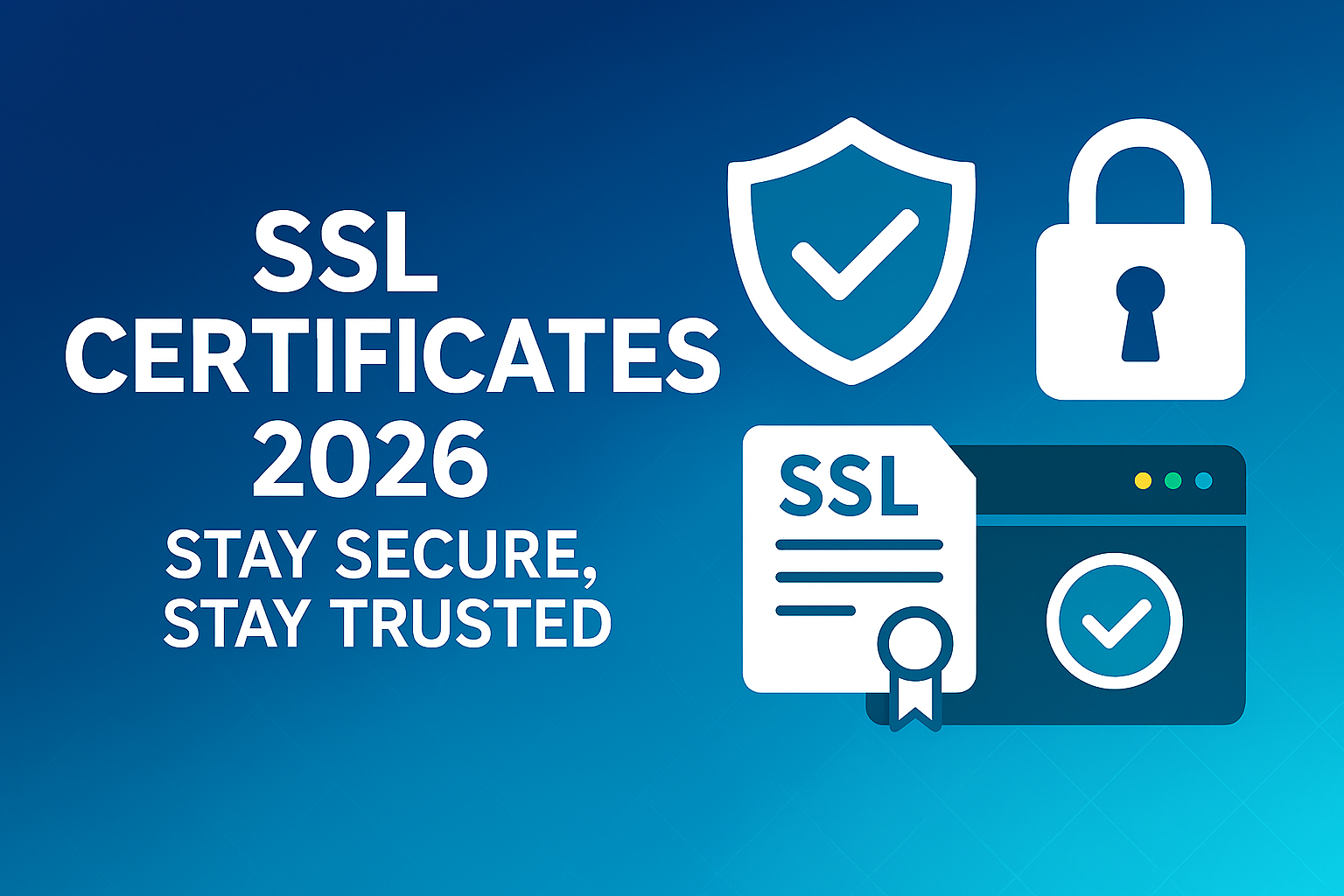
In 2026, your visitors expect one thing the moment they land on your site:
the padlock icon and a valid SSL certificate. No padlock often means no trust, no checkout, and no leads.
At the same time, SSL rules are changing fast. Certificate lifetimes are getting shorter, automation is becoming essential, and businesses must stay ahead of new security standards and post‑quantum threats.
If you run a business website, online store, portal or e‑learning platform, this guide will show you what’s new in 2026, what to watch out for, and how trusted SSL certificates from providers like IT Company Australia can keep your site secure, fast and credible.
What is an SSL certificate and why does it still matter in 2026?
An SSL certificate (also called a TLS certificate) is a digital file installed on your server that:
- Encrypts data between your website and your visitors’ browser
- Proves your site is really yours (not an impersonator)
- Enables HTTPS and the padlock icon in the address bar
In simple terms, an SSL certificate creates a private, secure “tunnel” so logins, payments and forms cannot be read or changed in transit.
Today, SSL is no longer optional:
- Modern browsers often flag non‑HTTPS sites as “Not secure”
- SSL supports SEO, as search engines prefer secure sites
- It builds trust and reduces cart abandonment
Did you know?
Even if you do not process payments, browsers and search engines still expect your site to use HTTPS. Contact forms, login pages and newsletter sign‑ups all involve personal data that should be protected.
The biggest SSL certificate changes coming in 2026
Shorter lifespans: from years to months
In the past, you could buy an SSL certificate that lasted several years. Those days are gone.
Industry rules are reducing SSL/TLS certificate validity again. From March 15, 2026, the maximum lifespan for most public SSL certificates will drop from 398 days to 200 days.
And the industry has already approved a further reduction to 47 days by 2029.
What this means for you:
- You will renew your SSL certificate more often
- Manual tracking in spreadsheets becomes risky
- Automation and managed SSL services become far more important
A missed renewal can break HTTPS, show scary browser warnings, and cost you real money in lost visits and sales.
Stronger encryption and post‑quantum readiness
As threats grow, SSL standards are evolving to stay ahead:
- CAs and browsers are planning for post‑quantum cryptography, which will resist future quantum computer attacks
- Shorter certificate lifetimes increase crypto‑agility – it becomes easier to change keys and algorithms fast
You do not need to understand the math. But you do need an SSL setup that can adapt quickly as ciphers and rules change over the next few years.
Which SSL certificate is best for my website in 2026?
The “best” SSL certificate depends on your site, your brand and your budget.
At a high level, there are four key types:
- Domain Validation (DV) – Fast, affordable, basic identity check
- Organization Validation (OV) – Confirms your legal business
- Extended Validation (EV) – Highest identity assurance and visual trust cues
- Wildcard – Protects one domain plus all same‑level subdomains
Below is a practical look at how you can match certificate types and prices using popular options available from IT Company Australia.
Affordable, fast protection (great for blogs, landing pages & small business)
- RapidSSL – from AUD 25.50/yr
- Ideal first SSL certificate for simple sites
- Domain Validation with up to 256‑bit encryption
- Easy automated domain control checks and 20% off on 2‑year plans
- GeoTrust QuickSSL Premium – from AUD 112.24/yr
- DV SSL certificate with faster issuance and higher brand recognition
- Strong encryption, ideal for growing small businesses
- Save 30% when you choose a 2‑year plan
Wildcard power: secure many subdomains with one certificate
If you have multiple subdomains like
shop.yourdomain.com, mail.yourdomain.com, portal.yourdomain.com, a wildcard SSL certificate keeps things simple:- RapidSSL Wildcard – from AUD 211.69/yr
- Budget‑friendly wildcard for basic subdomain coverage
- Great for startups and smaller IT teams
- GeoTrust QuickSSL Premium Wildcard – from AUD 396.39/yr
- DV wildcard with strong brand trust and unlimited same‑level subdomains
- One SSL certificate that grows as your online footprint grows
- GeoTrust True BusinessID Wildcard – from AUD 623.70/yr
- OV wildcard with business validation plus wide subdomain coverage
- Perfect for companies that want strong identity assurance across multiple services
Business‑grade trust: OV and EV options
If you run an established organisation, process payments or handle sensitive data, OV and EV SSL options can strengthen your brand credibility
- GeoTrust True BusinessID – from AUD 140.65/yr
- OV SSL certificate that validates your business details
- Shows visitors they are dealing with a real, verified organisation
- GeoTrust True BusinessID with EV – from AUD 254.31/yr
- Premium EV SSL certificate with the highest level of identity checks
- Designed for banks, financial services, SaaS platforms and high‑risk industries
Premium enterprise security: Secure Site range
For large organisations, regulated industries or mission‑critical portals, premium Secure Site solutions offer extra layers of assurance:
- Secure Site SSL – from AUD 566.88/yr
- High‑assurance SSL with strong 2048‑bit encryption
- Secure Site Pro – from AUD 1413.64/yr
- Advanced SSL certificate with enhanced security features
- Secure Site EV SSL – from AUD 1413.64/yr
- Extended Validation for brand‑sensitive, high‑value properties
- Secure Site Pro EV – from AUD 2129.69/yr
- Top‑tier EV plus advanced features for robust defence against identity‑targeted attacks
All of these SSL certificate options can be purchased and managed through IT Company’s SSL solutions page:
IT Company SSL certificates.
IT Company SSL certificates.
How to choose the right SSL certificate in three simple steps
Choosing an SSL certificate does not have to be complicated. Use this quick framework:
1. Map your website and subdomains
- Do you only use
www.yourdomain.com? - Or do you also run
shop.,portal.,mail., orelearning.on separate subdomains?
If you have many subdomains, a wildcard SSL certificate is often the most efficient choice.
2. Decide how much identity assurance you need
- Personal or micro business sites → DV (RapidSSL, QuickSSL Premium)
- Registered businesses & organisations → OV (True BusinessID, OV Wildcard)
- High‑risk or high‑value brands → EV (True BusinessID EV, Secure Site EV)
3. Set your budget (and plan for renewal cycles)
With shorter certificate lifespans, you must plan for more frequent renewals.
Pro Tip
Start with a cost‑effective DV SSL certificate like RapidSSL while you validate your business details. Then upgrade to OV or EV once your brand and compliance needs grow. This keeps your site secure from day one without slowing down your launch.
Do you still need a professional SSL provider in 2026?
Short answer: yes.
You can generate free certificates in some cases, but in 2026 the real challenge is reliable management, not just price. Shorter lifespans, stricter rules and evolving cryptography mean you benefit from:
- Guided selection: choosing the right SSL certificate type and level
- Fast issuance from trusted brands like GeoTrust and RapidSSL
- Expert help with installation and renewal reminders
- Central management of multiple domains and subdomains
Using a specialist provider such as IT Company Australia gives you fast setup and ongoing support as your digital footprint grows.
FAQs: SSL certificates for 2026
Is an SSL certificate mandatory for all websites now?
While not legally mandatory for every site, an SSL certificate is practically required in 2026. Browsers label non‑HTTPS pages as “Not secure”, and search engines favour secure sites.
If you collect any data – even a simple contact form – you should use HTTPS.
How often will I need to renew my SSL certificate?
Right now, many sites renew at least once per year. From March 2026, new rules will bring the maximum allowed term down to 200 days, and future rules will drop that to 47 days.
That means you will renew certificates more often, so automation or managed SSL services will help you stay compliant and avoid outages.
Does an SSL certificate improve SEO?
Yes. Major search engines treat HTTPS as a positive ranking signal, and many browsers show mixed‑content or “Not secure” warnings on unencrypted pages.
An SSL certificate alone will not guarantee top rankings, but it is a foundational requirement for modern SEO and user trust.
What happens if my SSL certificate expires?
If your SSL certificate expires, visitors may see:
- Warning pages saying your site is not safe
- The padlock icon disappearing
- A drop in trust, conversions and possibly traffic
Most issues can be fixed quickly by renewing or replacing the expired SSL certificate, but some damage to trust and sales may already have occurred. This is why short, automated renewal cycles are so important in 2026.
Ready to secure your website for 2026 and beyond?
The SSL landscape is changing fast, but the goal stays the same: protect your visitors and your brand.
By choosing the right SSL certificate – DV, OV, EV or wildcard – and by planning for shorter lifespans and future cryptographic changes, you can keep your website safe, trusted and ready for whatever comes next.
Explore, compare and order your SSL certificate today at:
IT Company SSL certificates.
IT Company SSL certificates.
Subscribe
Login
0 Comments