
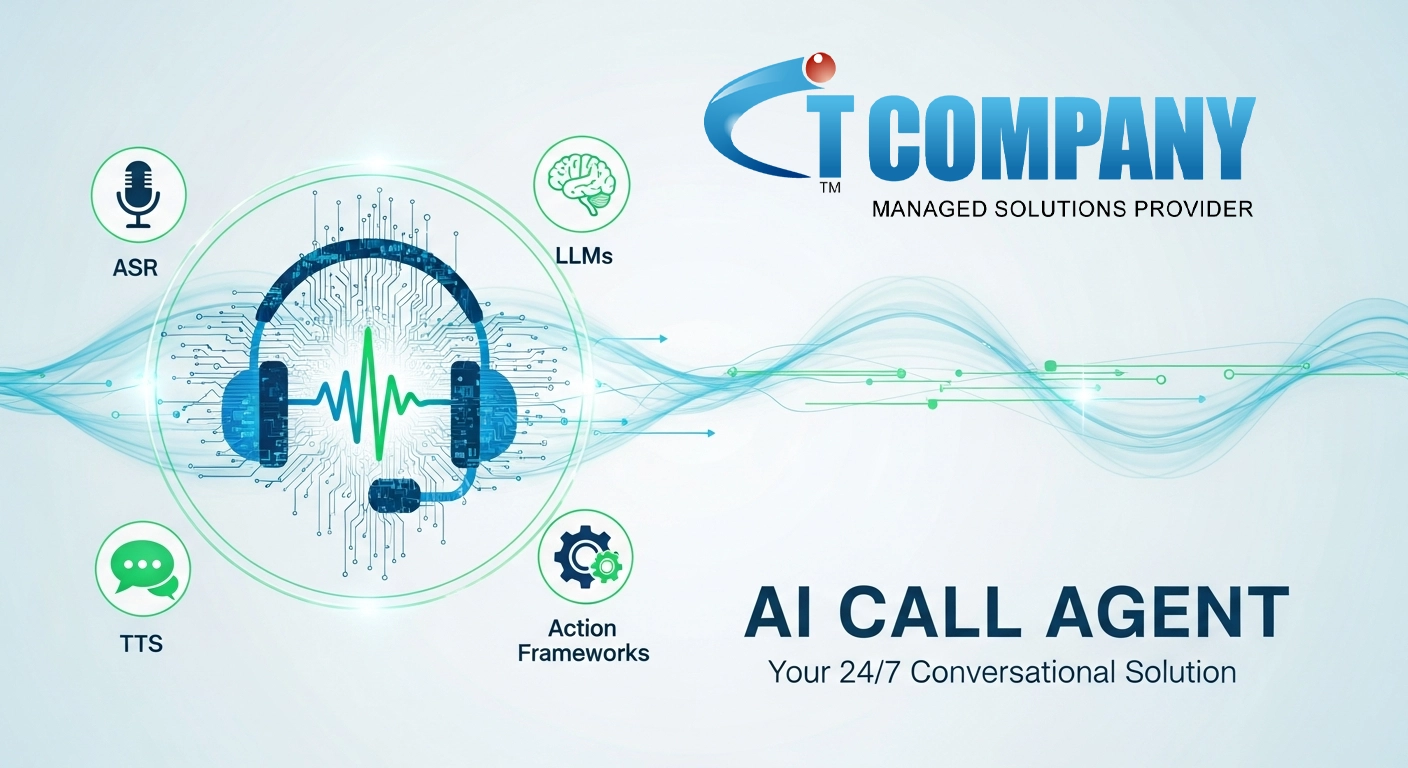
What is an AI Call Agent?
An AI Call Agent (also known as an AI voice agent or autonomous virtual agent) is a sophisticated software system designed to handle real-time phone conversations without human intervention.
Unlike the rigid Interactive Voice Response (IVR) systems of the past, today’s AI agents utilize Generative AI and Natural Language Processing (NLP) to understand context, sentiment, and intent. They don’t just “read a script”; they reason, plan, and execute tasks such as booking appointments in a CRM or processing a refund autonomously.
How it Works: The Tech Stack
The magic behind a 2026-era AI voice agent involves a high-speed pipeline of four core technologies:
Automatic Speech Recognition (ASR): Converts the caller’s spoken words into text instantly.
Large Language Models (LLMs): The “brain” that analyzes the text, understands the customer’s problem, and decides the best response.
Text-to-Speech (TTS): Converts the AI’s response back into a natural, human-sounding voice with realistic tone and pacing.
Action Frameworks: Connects the AI to your business tools (Salesforce, HubSpot, Zendesk) to perform real-world actions.
Why Your Business Needs an AI Call Agent in 2026
The shift toward AI-powered telephony isn’t just a trend; it’s a competitive necessity. As customer expectations for instant, 24/7 service peak, human-only teams are finding it impossible to keep up without skyrocketing costs.
1. 24/7 Availability with Zero Wait Times
AI agents don’t take breaks, sleep, or have “peak hours.” They can handle thousands of concurrent calls, ensuring that no customer ever hears a busy signal or spends twenty minutes on hold.
2. Massive Operational Savings
Automating routine inquiries such as “Where is my order?” or “How do I reset my password?” can reduce operational costs by up to 60%. This allows your human staff to focus on high-empathy, complex issues that truly require a human touch.
3. Hyper-Personalization at Scale
By integrating directly with your CRM, an AI call agent knows exactly who is calling, their purchase history, and their previous complaints. It can say, “Hi Sarah, are you calling about the delivery delay on your order from yesterday?” instead of asking for an account number.
4. Emotional Intelligence and Sentiment Analysis
Modern AI agents can detect frustration, urgency, or satisfaction in a caller’s voice. If a caller becomes highly distressed, the AI can recognize the sentiment shift and perform a seamless handoff to a human supervisor with a full summary of the conversation.
Key Features to Look for in 2026
When choosing an AI call agent platform, look for these “table stakes” features that separate basic bots from enterprise-grade agents:
| Feature | Importance |
| Low Latency | Responses must happen in under 500ms to maintain a natural conversational flow. |
| Multilingual Support | The ability to switch between 20+ languages and recognize regional dialects. |
| Omnichannel Continuity | If a customer starts a chat on your site and then calls, the AI should have the context. |
| Voice Biometrics | Using the caller’s unique voiceprint for secure, friction-free identity verification. |
| Action-Oriented Logic | The ability to not just “talk” but to “do” like updating a database or sending an email. |
Industry-Specific Use Cases
Healthcare: The Virtual Receptionist
AI agents in healthcare are saving billions by automating appointment scheduling, verifying insurance coverage, and providing post-discharge follow-ups. They ensure patients get answers immediately, reducing the administrative burden on clinics.
Retail & E-commerce: The Personal Shopper
From tracking packages to processing returns and even offering personalized product recommendations, AI agents are turning the support line into a revenue-generating channel.
Financial Services: Secure Transactions
Banks use AI agents for balance inquiries, fraud alerts, and qualifying loan leads. With enhanced security protocols like voice biometrics, these agents handle sensitive data more securely than traditional methods.

The Leading AI Call Agent Platforms (2026)
Several players have emerged as leaders in the autonomous voice space:
PolyAI: Known for enterprise-grade “super-human” voice experiences.
ServiceAgent: The top choice for SMBs looking for fast deployment and CRM integration.
Vapi & Retell AI: The preferred choices for developers who want to build custom, high-speed voice applications.
Agentforce (Salesforce): Best for companies already deeply embedded in the Salesforce ecosystem.
Best Practices for Implementing AI Voice Agents
To ensure a successful rollout, follow these three golden rules of AI implementation:
Be Transparent: Always inform the caller they are speaking with an AI. Trust is built on transparency, and customers are surprisingly receptive to AI when it solves their problems quickly.
Start with “Level 1” Tasks: Don’t try to automate everything at once. Start with high-volume, low-complexity tasks like FAQs or booking.
Monitor and Iterate: Use conversational analytics to identify where the AI might be struggling and refine its prompts or “knowledge base” regularly.
Conclusion: The Future is Conversational
The AI call agent is no longer a futuristic concept; it is the backbone of modern customer experience. By combining the speed of automation with the nuance of human-like conversation, businesses can finally deliver the “instant gratification” that 2026 consumers demand.