
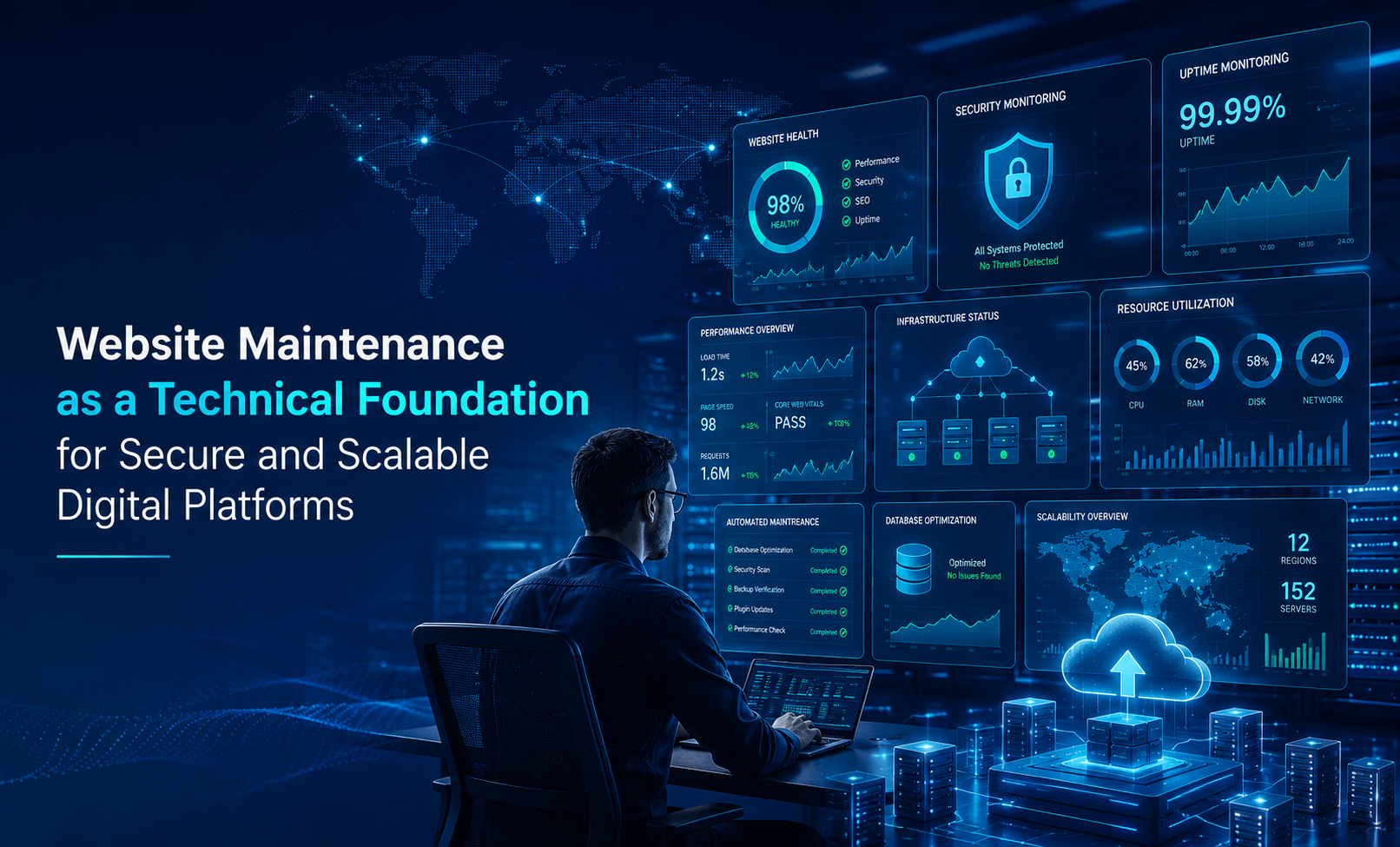
Modern websites are no longer static brochures. They are complex digital systems that require continuous care. Website maintenance is the technical backbone that keeps these systems stable secure and performant. Without it even the most well designed website can degrade quickly in speed reliability and trust.
This article explains website maintenance from a technical perspective. It focuses on infrastructure code security performance and long term scalability. If your website supports revenue lead generation or customer experience this is not optional work. It is essential engineering.
What Is Website Maintenance in Technical Terms
Website maintenance refers to the ongoing technical processes that keep a website running reliably and securely after launch. It includes server management code updates database optimisation performance tuning security hardening and regular monitoring.
Unlike redesigns or feature development maintenance is continuous. It ensures your digital platform evolves safely alongside browsers devices and cyber threats.
From a technical standpoint website maintenance covers five core areas.
• application updates
• security management
• performance optimisation
• infrastructure health
• data integrity and backups
• security management
• performance optimisation
• infrastructure health
• data integrity and backups
Each area supports the stability of production systems.
Why Website Maintenance Is Critical for System Stability
Web technologies change fast. PHP Node WordPress frameworks databases and browser standards update frequently. When websites are not maintained compatibility issues begin to surface.
Outdated software increases the risk of crashes data loss and security breaches. Regular website maintenance ensures that updates are deployed in a controlled and tested manner.
From an operational perspective this reduces unplanned downtime and emergency fixes.
Security Hardening Through Website Maintenance
Security is one of the most technical aspects of website maintenance. Attack vectors evolve continuously. Bots scanners and exploits target outdated plugins themes APIs and server configurations.
Technical security maintenance includes.
• patching CMS core and plugins
• enforcing strong authentication
• malware scanning and removal
• firewall and server rule reviews
• secure file permissions
• monitoring for suspicious behaviour
• enforcing strong authentication
• malware scanning and removal
• firewall and server rule reviews
• secure file permissions
• monitoring for suspicious behaviour
Did You Know
More than 40 percent of hacked websites are compromised due to outdated software components.
More than 40 percent of hacked websites are compromised due to outdated software components.
By implementing proactive website maintenance security risks are mitigated before they impact users or search visibility.
Performance Optimisation and Speed Management
Website speed is both a ranking factor and a user experience metric. Page load delays increase bounce rates server load and customer frustration.
Website maintenance ensures that performance stays consistent even as content grows.
Technical speed improvements include.
• database cleanups and indexing
• image and asset optimisation
• caching configuration
• server resource monitoring
• code refactoring
• content delivery network tuning
• image and asset optimisation
• caching configuration
• server resource monitoring
• code refactoring
• content delivery network tuning
Pro Tip
Performance audits should be repeated regularly because changes in content and plugins affect load times over time.
Performance audits should be repeated regularly because changes in content and plugins affect load times over time.
When performance degradation is ignored it accumulates silently until it becomes a serious business issue.
Infrastructure Monitoring and Uptime Assurance
Behind every website is infrastructure. This includes servers hosting environments storage and network layers.
Website maintenance includes continuous monitoring to ensure that these underlying systems remain healthy.
Technical tasks involve.
• server uptime checks
• disk space and memory tracking
• log file reviews
• error monitoring
• SSL certificate management
• hosting platform updates
• disk space and memory tracking
• log file reviews
• error monitoring
• SSL certificate management
• hosting platform updates
If infrastructure problems go unnoticed they can cause complete service outages.
Using a professional website maintenance service such as IT Company Australia’s Web Maintenance Solutions ensures enterprise grade monitoring without internal overhead.
How Website Maintenance Supports Scalability
Growth places stress on systems. More visitors more data more integrations and more content all increase complexity.
Website maintenance prepares websites for scale by maintaining clean code efficient databases and flexible infrastructure.
Technical scalability tasks include.
• removing deprecated code
• updating frameworks and APIs
• optimising database queries
• reviewing hosting capacity
• managing third party integrations
• updating frameworks and APIs
• optimising database queries
• reviewing hosting capacity
• managing third party integrations
Scalable systems are not built once. They are maintained continuously.
Search Engine Health and Technical SEO Maintenance
Search engines favour technically stable websites. Errors broken links slow pages and insecure connections reduce visibility.
Website maintenance indirectly protects SEO by maintaining a healthy technical environment.
Maintenance tasks that affect search rankings include.
• fixing crawl errors
• maintaining SSL security
• ensuring mobile compatibility
• monitoring site speed
• preventing downtime
• managing redirects
• maintaining SSL security
• ensuring mobile compatibility
• monitoring site speed
• preventing downtime
• managing redirects
Fun Fact
Google bots actively detect security issues and downtime which can result in ranking drops even without content changes.
Google bots actively detect security issues and downtime which can result in ranking drops even without content changes.
Website maintenance protects both visibility and credibility.
Answering Common Technical Questions About Website Maintenance
How often should website maintenance be performed
Critical tasks such as security updates monitoring and backups should run continuously. Deeper reviews and optimisations should occur monthly or quarterly depending on site complexity.
Does website maintenance include backups
Yes. Reliable website maintenance always includes automated and tested backups stored securely offsite.
Can website maintenance prevent hacking
While no system is immune proactive website maintenance significantly reduces attack surfaces and detects threats early.
Is website maintenance different from website support
Maintenance is preventative and ongoing. Support is reactive and issue based. Both are important but maintenance reduces the need for emergency support.
The Cost of Ignoring Website Maintenance
When maintenance is delayed technical debt builds up. Eventually issues appear all at once.
Common outcomes include.
• site crashes during peak traffic
• data corruption
• security breaches
• ranking losses
• loss of customer trust
• data corruption
• security breaches
• ranking losses
• loss of customer trust
Fixing these problems reactively is far more expensive than maintaining systems proactively.
Website maintenance is not a cost. It is a risk management strategy.
When to Use Professional Website Maintenance Services
Businesses often underestimate the technical skill required for consistent maintenance.
A professional provider offers.
• specialist technical expertise
• 24 7 monitoring
• structured update processes
• documented change management
• compliance awareness
• predictable costs
• 24 7 monitoring
• structured update processes
• documented change management
• compliance awareness
• predictable costs
For Australian businesses relying on secure high performance websites partnering with a professional maintenance team ensures systems remain reliable while internal teams focus on growth.
Final Thoughts
Website maintenance is the technical discipline that keeps digital platforms secure fast and scalable. It protects infrastructure code and data from degradation and threats.
Ignoring it places your business at operational risk.
By investing in structured website maintenance you ensure that your website continues to perform as a reliable business asset rather than becoming a liability.
If you need professional support tailored to business critical websites explore IT Company Australia’s website maintenance services to protect and future proof your digital presence.
