Website Maintenance Company vs Freelancer in Australia: 2026 Guide
By neelamkhalid
A reliable website needs regular technical care after launch. Updates, backups, security checks and functional tests help keep forms, bookings and checkout systems working. Without planned maintenance, a small website problem can interrupt enquiries, sales or customer service.
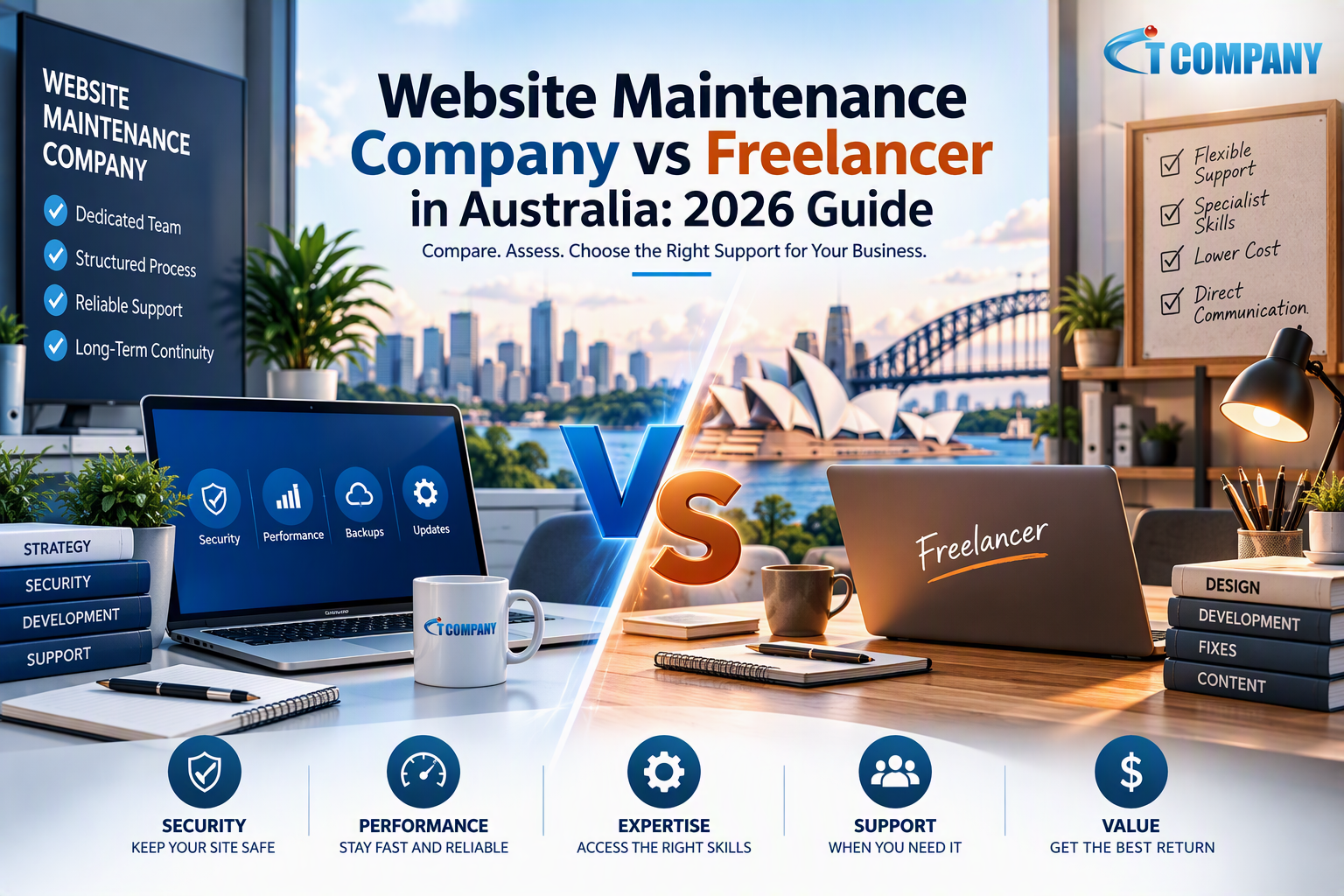
Australian businesses usually choose between a freelancer and a website maintenance company. A freelancer can offer direct communication, specialist knowledge and flexible pricing. A company can provide a broader team, documented processes and stronger support continuity.
The right choice depends on how important the website is to daily operations. A simple information website may work well with a freelancer, while an online store or booking platform may need several technical skills and faster escalation.
This guide compares both options using practical business criteria. It covers expertise, availability, security, accountability, costs and long-term support, helping Australian businesses choose a suitable maintenance model in 2026.
Which Is Better: A Company or a Freelancer?
A freelancer can suit a simple website with limited support needs and flexible response times. A website maintenance company usually suits a complex or business-critical website that needs regular monitoring, documented reporting, several technical skills and reliable support when one technician becomes unavailable.
In This Guide
You will learn:
how a company and freelancer differ;
which option suits different website types;
how continuity and security affect the decision;
what each model may cost and exclude;
which questions to ask before signing an agreement.
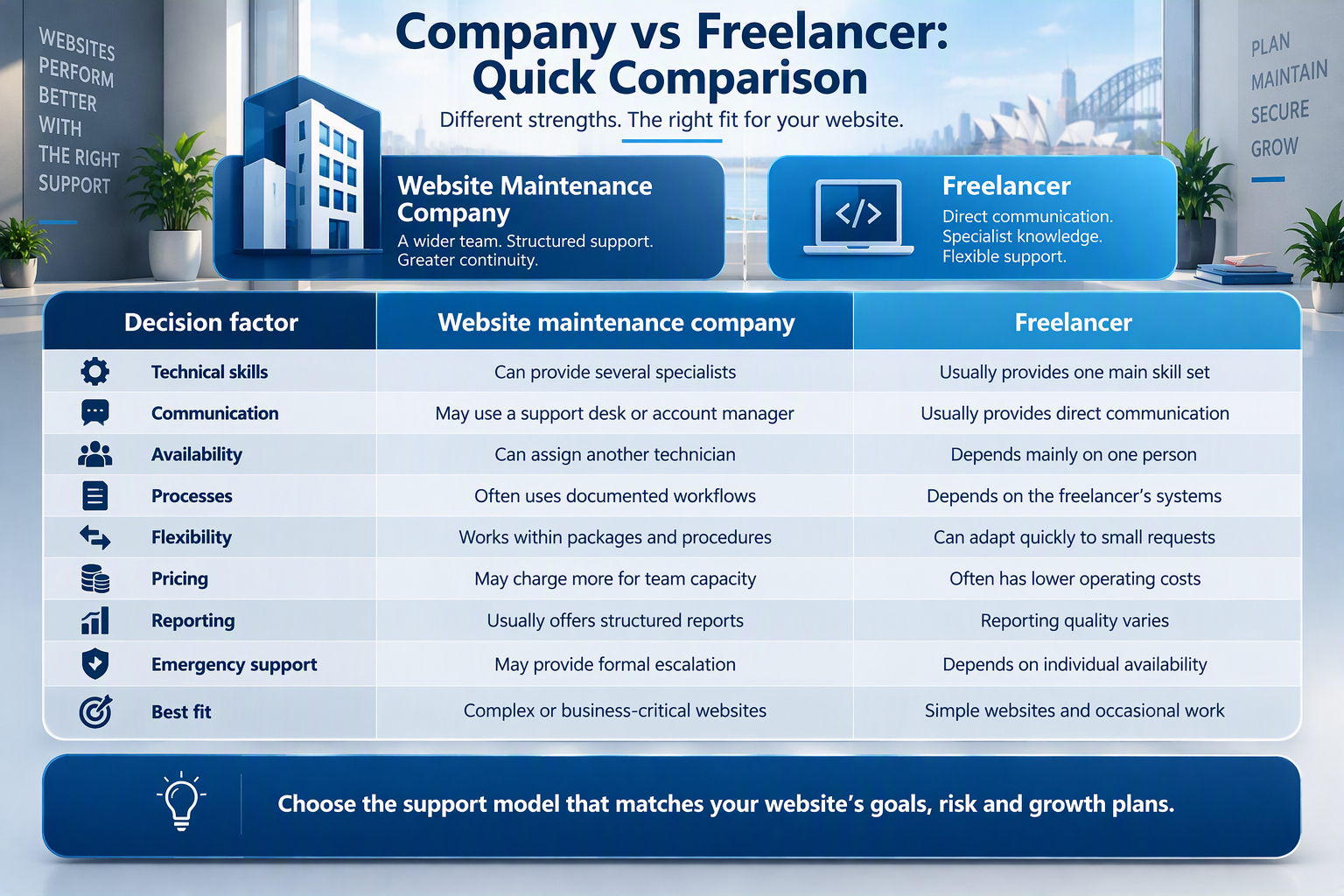
Company vs Freelancer: Quick Comparison
This table gives readers a quick overview of how each support model differs. A website maintenance company usually provides broader skills, structured processes and better continuity, while a freelancer often offers direct communication, flexibility and lower operating costs. The best choice depends on the website’s complexity, business impact and required response time.
Compare website maintenance companies and freelancers across key support factors.
What Does a Website Maintenance Company Do?
A website maintenance company manages technical tasks after a website goes live. Common responsibilities include updates, backups, uptime monitoring, performance checks, security scanning, functional testing and monthly reporting. The exact coverage depends on the written package.
A company may distribute work across developers, hosting technicians, security specialists and content staff. This structure helps when a problem involves several systems rather than one WordPress plugin or page.
The current website maintenance services and packages from IT Company Australia cover areas such as WordPress updates, backups, performance, uptime monitoring, SSL validation and reporting. Package features differ, so businesses should review the current service scope before choosing a plan.
A company should also record support requests, approvals and completed work. Good documentation allows another technician to continue the task without asking the business to explain the entire problem again.
What Does a Website Maintenance Freelancer Do?
A freelancer maintains websites as an independent professional. One person may handle software updates, backups, repairs, content changes and client communication.
This model often gives the business direct access to the technician completing the work. It can reduce communication layers and support faster decisions for straightforward requests.
Many freelancers specialise in WordPress, WooCommerce, Shopify, front-end development or website performance. Strong specialist knowledge can make a freelancer an effective choice for a website that uses a familiar platform and limited integrations.
The main risk comes from single-person dependency. Illness, leave or competing client work can delay support unless the freelancer has arranged reliable cover.
Key Criteria for Choosing Maintenance Support
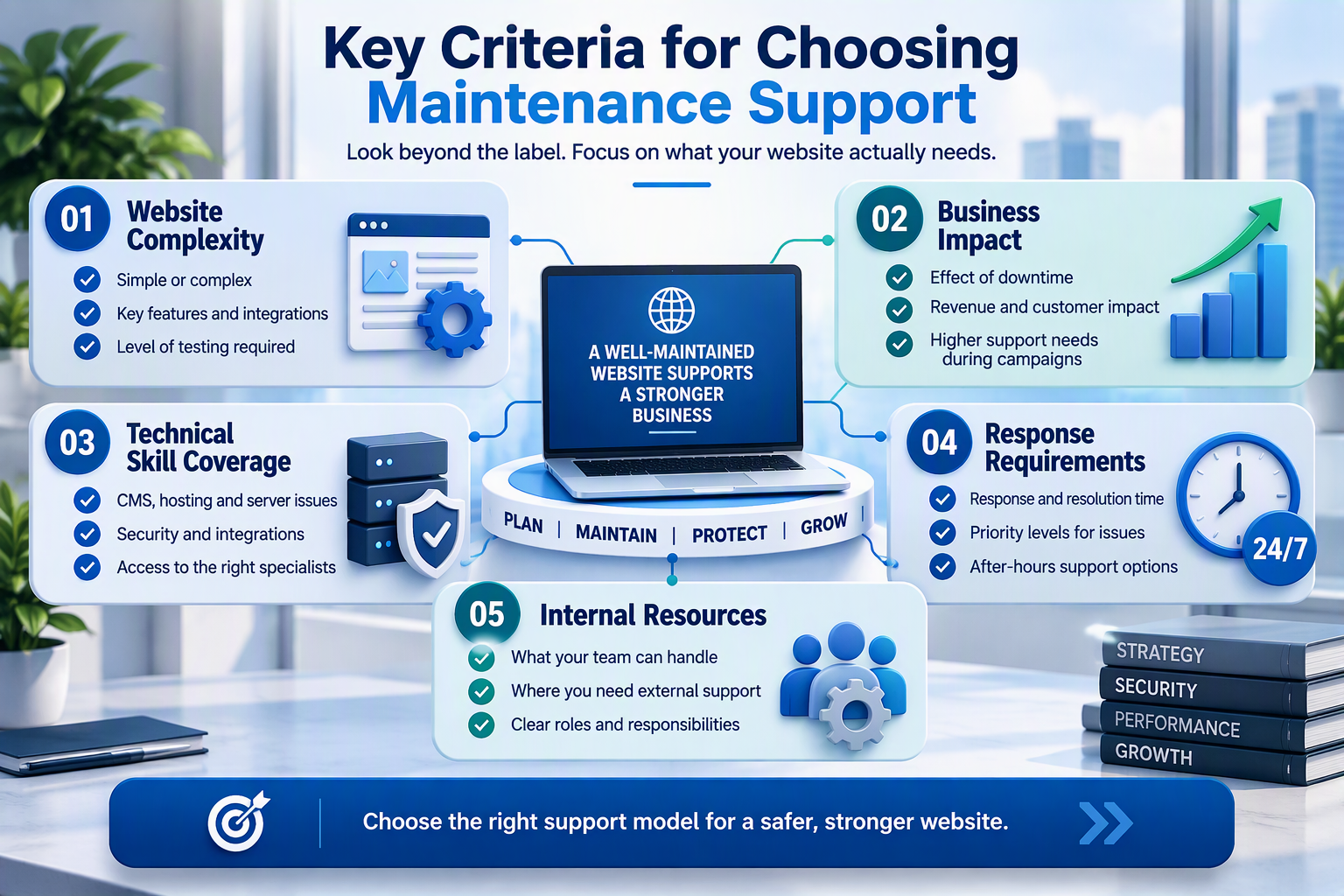
The provider’s label matters less than the service behind it. Businesses should compare technical capability, availability, process quality and website risk before considering price.
Five key criteria for choosing website maintenance support: complexity, business impact, technical skills, response requirements and internal resources.
When a Freelancer Is the Better Choice
A freelancer can provide strong value when the website has a simple structure and predictable maintenance requirements. Direct communication also helps when the business prefers to work with one familiar technician.
Simple Website Requirements
A brochure website may only need regular updates, backups and form tests. One experienced freelancer can complete these tasks without requiring a larger support team.
The freelancer should still follow a documented checklist. Simple websites can lose enquiries when forms, email delivery or domain settings fail.
Limited Monthly Work
Some businesses only need occasional content updates and routine technical checks. A freelancer can offer flexible hourly work or a small monthly arrangement.
Confirm whether the freelancer provides proactive monitoring or only responds to requests. Reactive support may leave unnoticed problems unresolved.
Specialist Platform Knowledge
An experienced WordPress freelancer may understand a particular theme, plugin stack or page builder in depth. This familiarity can make routine changes faster and reduce unnecessary investigation.
Check whether the specialist also understands hosting, backups and security. Platform expertise alone may not cover every maintenance risk.
Direct Communication
Direct contact allows the business to explain a problem to the person completing the work. This can reduce delays created by account-management or support-desk processes.
Both sides should document approvals and important technical decisions. Informal messages can create confusion about costs, deadlines and scope.
Lower-Risk Website Operations
A freelancer can work well when short delays will not create serious financial or operational damage. The business must still retain ownership of accounts and current backup copies.
An alternative technical contact provides additional protection. This person can help when the main freelancer becomes unavailable.
When a Website Maintenance Company Is Better
A company usually becomes more suitable when a website supports important business processes. Complex systems and strict response requirements benefit from broader technical coverage and structured support.
Business-Critical Website Functions
Online stores, booking platforms and membership websites depend on connected customer journeys. A failure in one step can prevent customers from completing an order or accessing an account.
A company can assign different specialists to investigate the application, database, payment service or hosting environment. The service agreement should still identify which integrations the package covers.
Support Continuity
A company can reduce single-person dependency by assigning another technician when the primary contact is unavailable, provided its documentation and access procedures support the handover.
Team size alone does not guarantee continuity. Poor documentation can leave the replacement technician without the information needed to continue the work.
Ask how the company records credentials, previous changes and open issues. A structured ticket history can support a smoother handover.
Broader Technical Requirements
A company may offer development, website security, hosting and content skills within one organisation. This reduces the number of suppliers involved in complex incidents.
Broader capability can also increase costs. Make sure the selected package includes the skills the website actually requires.
Formal Reporting
Companies often use monitoring tools and standard reporting processes. A useful website maintenance report records updates, backup status, uptime, scans, tests and unresolved problems.
Reports should explain the meaning of each result. Automated scores without technician comments provide limited business value.
Structured Escalation
A company can classify requests by urgency and business impact. A failed checkout should receive a higher priority than a minor image change.
The escalation process should identify support hours and emergency fees. Businesses also need to know who can approve work that exceeds the monthly allowance.
Security and Continuity
Security and recovery often determine whether a company or freelancer can support a business-critical website. Both models can provide effective security when they use clear processes, suitable tools and reliable backup arrangements.
Software and Security Updates
The provider should keep the CMS, plugins, themes and extensions current. High-risk updates may require staging and functional tests before live deployment.
A freelancer may manage this process effectively for a familiar platform. A company may provide wider support when the update affects hosting, integrations or custom code.
Security Monitoring
Security support may include vulnerability scanning, malware scanning and suspicious-login alerts. The agreement should distinguish detection from removal and recovery.
Businesses that need broader protection can review website security and protection services. Confirm whether malware removal, investigation and website restoration form part of the selected service.
Backup Management
Backups should cover website files and the database. The provider should also define backup frequency, retention, storage location and restoration responsibilities.
A company may provide more staff for recovery work. A freelancer can deliver the same result when reliable backup systems and documented restoration steps exist.
Restoration Testing
Creating a backup does not confirm that the website can use it. Periodic restoration tests help identify incomplete or damaged copies before an emergency.
Ask how often the provider tests recovery and where the test takes place. Restoring directly over the live website can create unnecessary risk.
Account Ownership
The business should own or control its domain, hosting account, CMS, analytics and backup storage. Providers need suitable access, but they should not become the only parties able to reach essential systems.
Document access before maintenance begins. This protects the business during staff changes, provider disputes and service handovers.
Cost and Long-Term Value
A freelancer often charges less because one person provides the service with lower operating costs. A company may charge more because it maintains staff, support tools, monitoring systems and replacement capacity.
Lower cost does not always mean better value. A basic fee can exclude testing, reporting, restoration and urgent repairs, creating unexpected charges later.
Companies can also offer unnecessary coverage. A small information website may not need several specialists or advanced monitoring tools.
Compare the actual service rather than the provider type. Detailed pricing information belongs in the website maintenance cost guide for Australia in 2026, which covers package structures and common pricing factors.
Cost consideration
Freelancer
Maintenance company
Routine monthly fee
Often lower
Often higher
Urgent support
Depends on availability
May use formal emergency rates
Specialist work
May require outsourcing
May use an internal specialist
Monitoring tools
May use a smaller tool set
May include broader monitoring
Reporting
Varies by freelancer
Often standardised
Leave coverage
Requires a backup plan
May assign another technician
Additional work
Usually hourly or quoted
Quoted or charged above package limits
Prices should not drive the decision alone. Compare expected downtime, recovery requirements and the cost of lost enquiries or transactions.
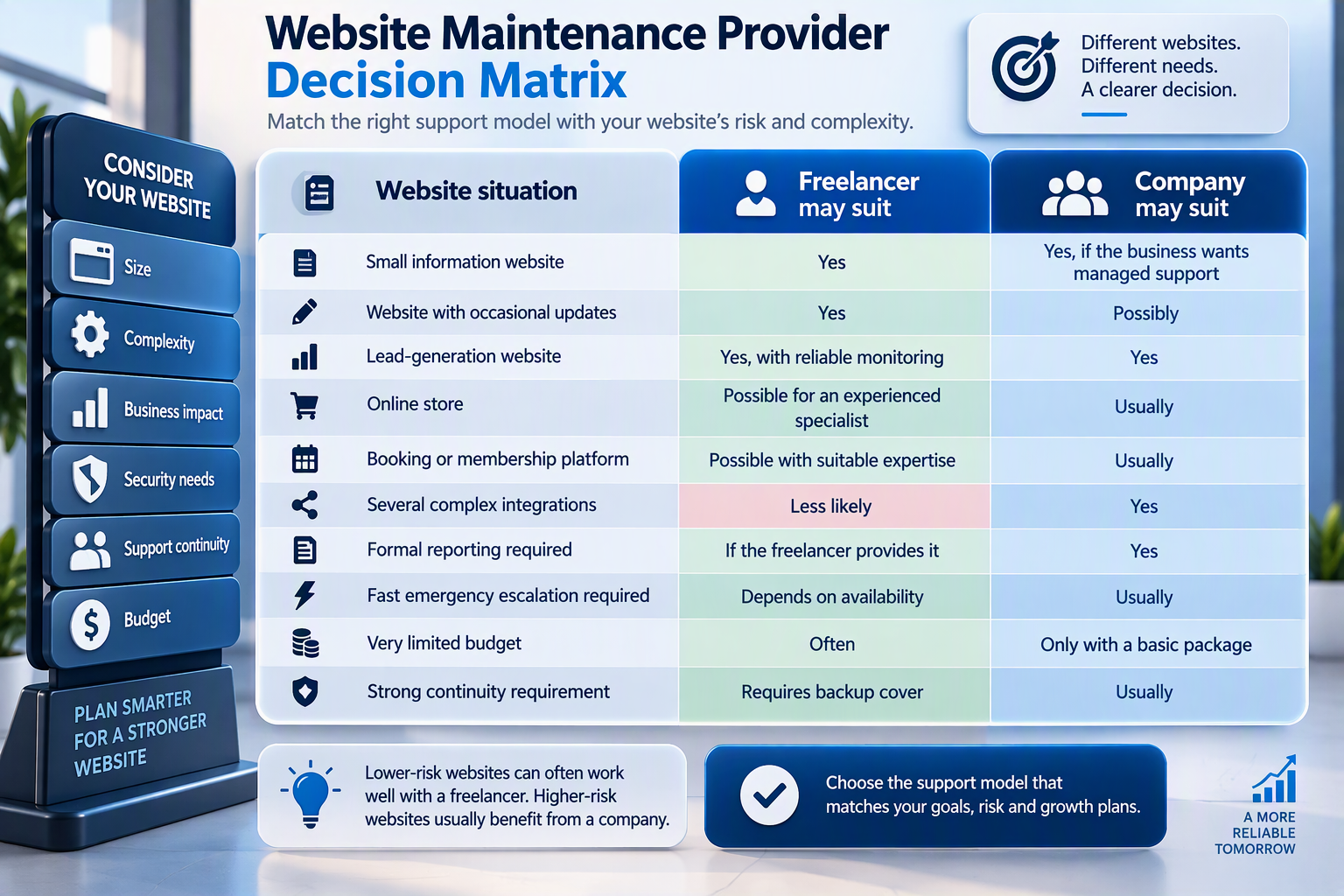
Decision Matrix
Use the following matrix to match the provider type with the website’s risk and complexity.
Compare freelancer and company support options by website risk, complexity, budget and continuity needs.
Questions to Ask Before Choosing a Provider
A written proposal should define tasks, schedules and responsibilities. Avoid relying on broad labels such as premium support or complete website care.
What Does the Package Include?
Request a list of included updates, backups, security checks, tests, content work and support hours. The proposal should also state how often each task occurs.
For a full scope review, compare the separate guide to website maintenance inclusions
Which Services Cost Extra?
Ask about malware removal, restoration, emergency support, custom development and integration repairs. These tasks often sit outside a basic monthly package.
The provider should supply rates or a clear quotation process. Written terms reduce disputes when urgent work begins.
What Happens When the Main Technician Is Unavailable?
A freelancer should provide a cover or handover plan. A company should explain how another technician accesses the necessary documentation and systems.
A backup person without access cannot provide meaningful continuity. Confirm the process before an outage occurs.
Who Owns the Accounts?
The business should retain ownership of the domain, hosting, plugins, analytics and third-party services. Providers should receive only the access required for their work.
Use individual administrator accounts instead of shared credentials where possible. Remove access promptly when the relationship ends.
How Does Reporting Work?
Request a sample website maintenance report. The report should record actions, results, open risks and recommended work.
A useful report separates automated checks from manual technician actions. It should also explain anything that requires business approval.
Comparing Site Maintenance Services
Different providers use similar package names for different scopes. Compare the actual work, frequency and response terms instead of relying on labels.
A professional site maintenance services package should clearly explain monitoring, updates, backups and support. Businesses should also confirm content allowances and additional technician rates.
Service area
Question to ask
Updates
Does the provider test major updates and offer rollback support?
Backups
Where are copies stored, and does the provider test restoration?
Security
Does the service include scanning, removal or incident response?
Monitoring
Does an alert start an investigation or only send a notification?
Testing
Which forms, checkouts and customer journeys receive testing?
Reporting
Does the provider explain completed work and open risks?
Support
What response times and support hours apply?
Exit process
How will access, backups and documentation transfer?
Common Selection Mistakes
Choosing by Price Alone
A low monthly price may exclude testing, reporting or website recovery. Compare business risk and service scope before comparing fees.
The cheapest option can become expensive during an emergency. Ask for routine, urgent and out-of-scope rates in writing.
Assuming Every Company Has Wider Expertise
A large team does not guarantee experience with the website’s platform. Check relevant skills, supported integrations and escalation procedures.
Ask who will complete the regular work. A business should not assume that the most experienced staff member manages every account.
Assuming Every Freelancer Is Cheaper
A freelancer may outsource unfamiliar work or charge emergency rates. These costs can narrow the price difference between a freelancer and company.
Request separate rates for monthly care, development and urgent repairs. Clear pricing supports a fair comparison.
Ignoring Single-Person Dependency
A strong freelancer can still become unavailable. Without documentation and backup access, the business may struggle to obtain urgent support.
Require current records and an alternative technical contact. The business should also retain independent access to backups.
Ignoring Communication Layers
A company may route requests through account managers and support desks. Extra layers can slow simple tasks when responsibilities remain unclear.
Confirm the main contact and escalation path. The organisation should know who can approve additional work.
Accepting Untested Backups
A successful backup notification does not prove that the website can be restored. Incomplete files or database errors may remain hidden until recovery becomes necessary.
Include restoration testing in the maintenance scope. Record the outcome and any problems discovered during the test.
Website Maintenance Selection Checklist
Before choosing a company or freelancer:
document the website platform, functions and integrations;
estimate the business effect of downtime or lost data;
confirm monitoring, backup and testing schedules;
compare response targets, exclusions and extra charges;
retain ownership of all essential website accounts.
Frequently Asked Questions
Is a Website Maintenance Company Better Than a Freelancer?
A company usually offers broader skills, formal processes and stronger continuity. A freelancer may offer lower costs, direct communication and specialist knowledge. The right choice depends on website complexity, business impact and required response times.
When Should a Business Hire a Freelancer?
A freelancer can suit a simple website with predictable maintenance needs. The arrangement works best when the website can accept flexible response times and the freelancer provides clear backup, documentation and availability arrangements.
When Should a Business Hire a Maintenance Company?
Consider a company when the website supports payments, bookings, customer accounts or important lead generation. A company can also suit businesses that need formal reports, structured escalation and access to several technical specialists.
What Should a Web Maintenance Company Include?
A web maintenance company should define updates, backups, security checks, uptime monitoring, functional testing, performance work, reporting and support conditions. The agreement should list exclusions and additional fees.
Can a Company Prevent Every Website Problem?
No provider can prevent every technical fault or security incident. Regular maintenance can reduce avoidable risks, detect problems sooner and provide stronger recovery options.
Is a Freelancer Suitable for WordPress Maintenance?
An experienced WordPress freelancer can maintain a simple or moderately complex website. Check the freelancer’s update process, backup arrangements, security knowledge, testing method and emergency availability.
Are Hosting and Maintenance the Same?
No. Hosting provides the server environment that keeps the website available. Maintenance manages the website’s software, functionality, performance and ongoing technical condition.
Some providers offer combined web hosting and maintenance services. Review the website hosting maintenance guide before deciding whether to use one or separate providers.
What Should a Website Maintenance Report Include?
A website maintenance report should show updates, backups, uptime results, security findings, performance checks and unresolved issues. It should also explain recommended actions in simple language.
What Is the Best Maintenance Option for a Small Business?
A freelancer may suit a simple website with a limited budget. A structured website maintenance service for small business may suit a business that relies on regular enquiries, bookings, advertising campaigns or online sales.
How Can a Business Compare the Best Website Maintenance Companies?
Compare platform experience, inclusions, exclusions, backup processes, response targets and account ownership. The best website maintenance companies should provide clear evidence of their processes rather than relying on package names or unsupported claims.
Final Thoughts
A freelancer can provide flexible and cost-effective support for a simple website. Direct communication and specialist knowledge may make this model especially useful when the maintenance workload remains predictable.
A website maintenance company can provide broader skills, structured reporting and stronger support continuity. This model often suits online stores, booking platforms and other websites that directly support revenue or daily operations.
Compare each provider’s documented scope before choosing. Confirm how the provider handles updates, backups, monitoring, testing, urgent support and service handovers.
Neelam Khalid is a passionate SEO expert and professional content writer with 10+ years of experience helping businesses grow through strategic content marketing. She has written extensively across numerous niches, including IT, SaaS, law, legal services, technology, and business consulting. Her ability to combine technical SEO knowledge with engaging storytelling enables brands to connect with their audiences while achieving stronger search visibility. Neelam's work has been featured on leading international platforms, where she contributes valuable insights on digital growth and content excellence.