

Australians often research an accounting firm online before requesting a consultation. Prospective clients may compare services, examine team profiles and check office locations before deciding whether a practice understands their financial or business needs.
Introduction
An accountant’s website is therefore more than a digital brochure. The accounting website must communicate professional capability, explain services clearly and give each visitor an appropriate next step without making unsupported promises.
Effective web design for accountants combines credible content, simple navigation, mobile performance and secure enquiry handling. Weak service pages or outdated profiles can reduce confidence even when the website looks polished.
The following seven essentials provide a practical foundation for Australian accounting websites in 2026. They cover structure, credibility, accessibility, lead generation, local visibility, security and post-launch maintenance.
What Is Web Design for Accountants?
Web design for accountants covers the planning, design, development and maintenance of websites for accountants, bookkeepers, tax practitioners and advisory firms. Unlike a general website, an accounting site often needs to explain related services to audiences with different financial needs.
An individual seeking tax assistance has different priorities from a company needing payroll support or management reporting. Professional website design and development should identify these audiences before connecting services, professionals, locations and enquiry pathways.
Why Web Design for Accountants Matters
Prospective clients assess more than the visual appearance of an accounting website. Clear service information, genuine professional profiles and accurate contact details help visitors determine whether the practice may suit their needs.
A well-planned accounting website also supports the practice internally. Focused forms can send enquiries to the right team, while an organised content structure makes services and office details easier to maintain.
Security and accuracy matter because accountants operate in a trust-sensitive field. An outdated profile, broken form or unsafe document request can weaken confidence before a professional conversation begins.
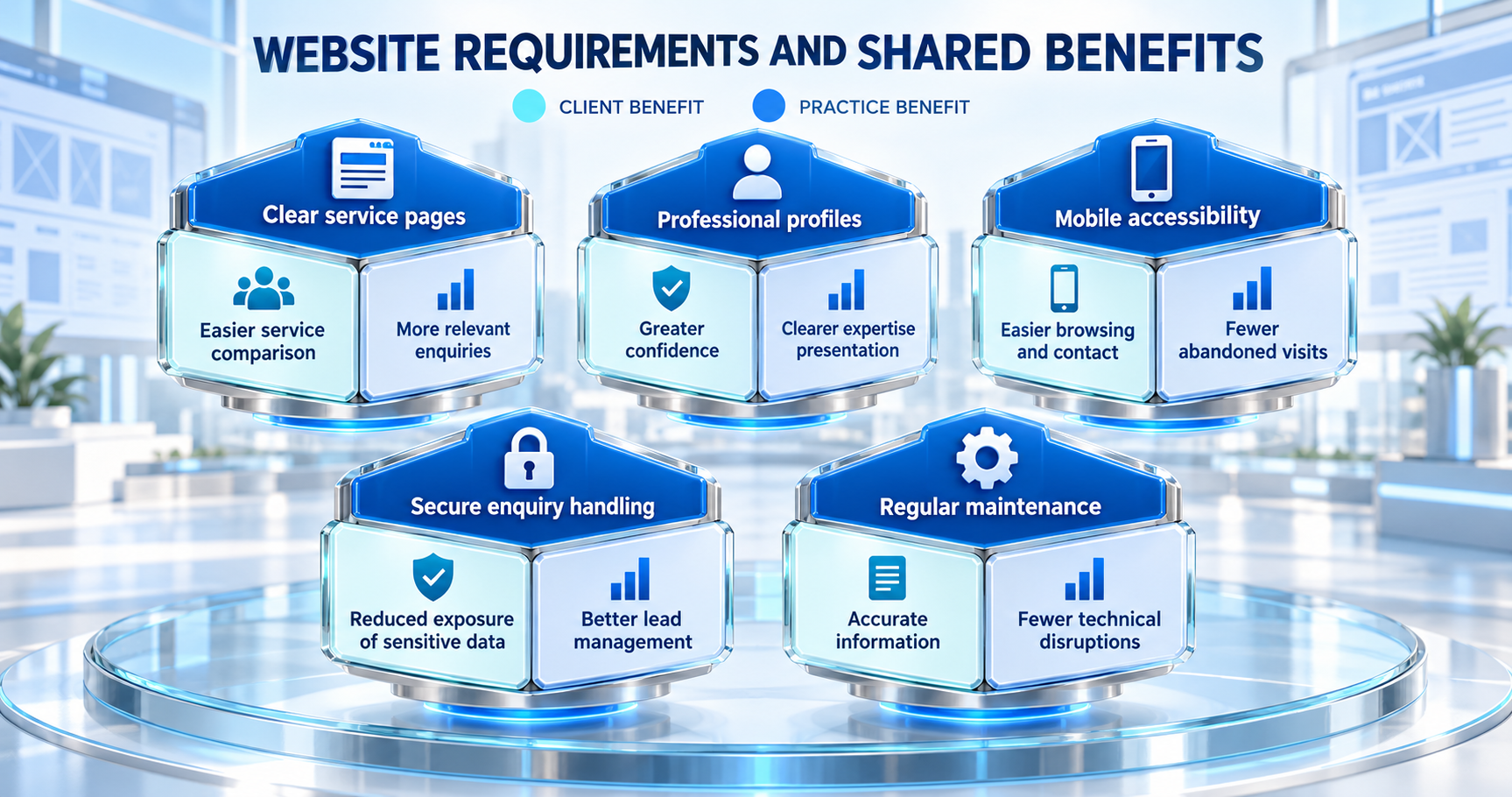
The 7 Essential Web Design Needs for Accounting Firms
1. Create Clear Accounting Service Pages
An accounting firm may offer several services, but placing every service on one long page makes information difficult to evaluate. Each priority service should have a dedicated page explaining its purpose, audience, scope and suitable next step.
A business accounting page should not repeat bookkeeping content. Separate pages for tax, payroll, advisory and cloud accounting help clients understand differences while giving search engines a clearer site structure.
Important pages may cover:
- Business accounting, taxation and bookkeeping
- Payroll, management reporting and cash-flow support
- Business advisory and company establishment
- Cloud accounting and software implementation
- SMSF accounting or audit assistance, where genuinely offered
Service claims require care. Statements such as “guaranteed tax savings” can create unrealistic expectations, while a transparent explanation of scope and process gives the client more useful information.
A wider SEO services strategy can support keyword research, technical optimisation and content planning. Search visibility should come from useful accounting content rather than unrelated phrases inserted across every page.
2. Build Trust With Verifiable Evidence
Accounting engagements depend heavily on confidence. Clients want to know who may handle their work, which services the practice provides and whether its experience matches their circumstances.
The accounting website should introduce professionals through genuine photographs and accurate profiles. A useful profile may include the person’s role, verified qualifications, professional memberships, service specialisations and relevant industry experience.
Trust also comes from consistent office details, domain-based email addresses and recently reviewed content. Testimonials or case studies can add value when the practice has permission to publish them and protects confidential client information.
Outdated professionals, office addresses or membership claims weaken credibility. The firm should assign responsibility for checking every professional profile and factual claim rather than treating website content as a one-time task.
3. Prioritise Mobile Design and Accessibility
Clients may visit an accounting website from a phone while travelling or managing a business. Services, locations, professional profiles and contact options must remain easy to read and use on smaller screens.
Mobile navigation should use familiar labels such as “Services”, “Our Team”, “Locations” and “Contact”. A crowded homepage or complicated menu can prevent visitors from finding the right accounting service.
Accessibility should form part of the initial website design. Text needs sufficient contrast, form controls require visible labels and links should describe their destinations clearly.
Keyboard controls, meaningful image alternatives and useful error messages also improve access. Further planning guidance is available in this article about website design services in Australia.
4. Create Focused Enquiry Journeys
Website traffic has limited value when visitors cannot determine how to contact the right person. Each accounting service page should lead to an action that reflects the visitor’s needs.
A bookkeeping enquiry may require a different route from a business advisory request. Multi-office practices may also need to route submissions by service, location or professional specialisation.
An initial form should request only enough information to direct the enquiry. A name, contact details, service category and brief message are generally more suitable than tax file numbers, passwords or financial records.
Sensitive files should move through an approved secure portal rather than a standard public form. Form confirmations should explain the next step without promising a response period the practice cannot consistently meet.
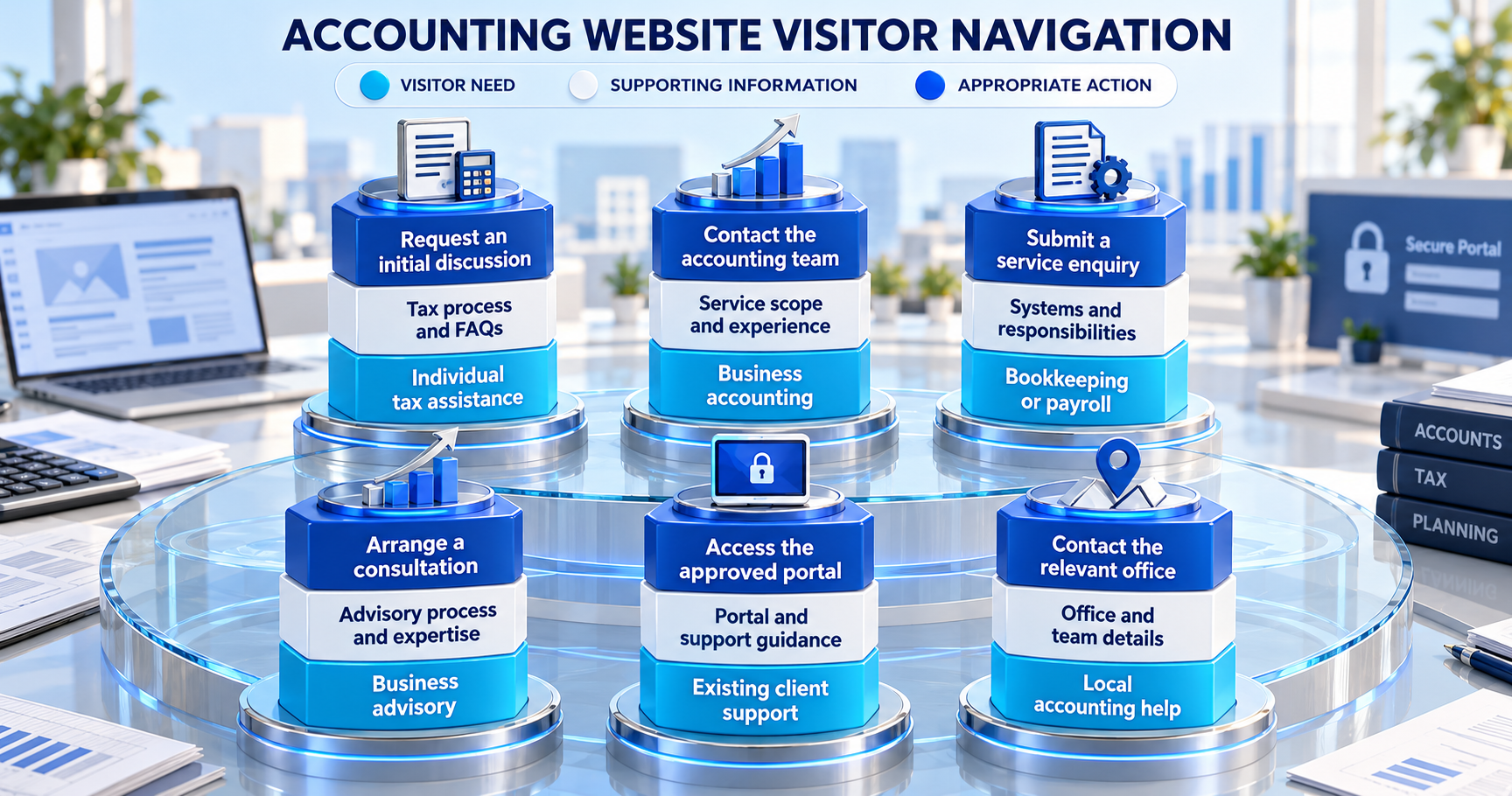
The enquiry structure should match the practice’s actual workflow. Every form also needs routine testing because a successful on-screen message does not prove that the notification reached an active account.
5. Improve Local Search Visibility
Many accounting searches include a location because clients may prefer an accessible, ongoing professional relationship. Clear office pages help visitors identify where the practice operates and which services are available.
Each genuine office page should include an accurate address, contact details, relevant professionals and useful visitor information. Practices should avoid publishing many thin suburb pages where only the location name changes.
Internal links can connect locations, services and professionals. An office page may link to local accountants, while a professional profile can direct visitors to relevant service pages.
The practice name, address and telephone number should remain consistent across the website and external profiles. This guide to designing a website for a small business offers additional guidance on navigation and launch planning.
6. Protect the Website and Client Journey
An accounting website may not store full client records, but it still represents a trusted professional practice. A compromised website can interrupt enquiries, expose submitted information and damage confidence.
Website security should cover the content management system, hosting environment, administrator accounts, public forms and third-party integrations. The public website and authenticated client portal should remain separate, clearly labelled systems.
Core controls include HTTPS, strong administrator authentication, controlled staff permissions, software updates and regular backups. Malware monitoring, spam protection and recovery testing can provide further safeguards.
The hosting environment should suit the website platform, traffic and backup needs. Practices can review web hosting services and website security services when planning infrastructure.
Business email hosting can provide consistent domain-based addresses for professionals and departments. Email hosting should still include appropriate access controls and security planning.
7. Plan Maintenance Before Launch
An accounting website continues to change after launch. Professionals join or leave, services evolve, office details change and software requires updating.
The practice should identify who owns professional content, technical maintenance and enquiry monitoring. These duties may belong to different people or providers, but each task needs a named owner.
Forms, contact information, portal links and profiles should undergo scheduled checks. Tax and business articles also need publication or review dates because financial guidance can become outdated.
A website maintenance service can support updates, backups, performance checks and monitoring. The guide to website maintenance in 2026 explains further post-launch considerations.
| Maintenance task | Suggested frequency | Main purpose |
|---|---|---|
| Form and notification testing | Monthly | Confirm enquiries arrive |
| Team and office review | Quarterly | Keep professional information accurate |
| Software and security checks | Ongoing | Reduce technical exposure |
| Backup restoration test | Periodically | Confirm recoverability |
| Article review | Based on subject | Remove outdated financial guidance |
Template or Custom Accounting Website?
A template may suit an independent accountant or smaller firm with standard services. The template must still provide acceptable mobile performance, accessibility, content controls and form flexibility.
Custom web development provides greater control over navigation, enquiry routing and system connections. It may suit practices with several offices, specialist divisions or more complex workflows.
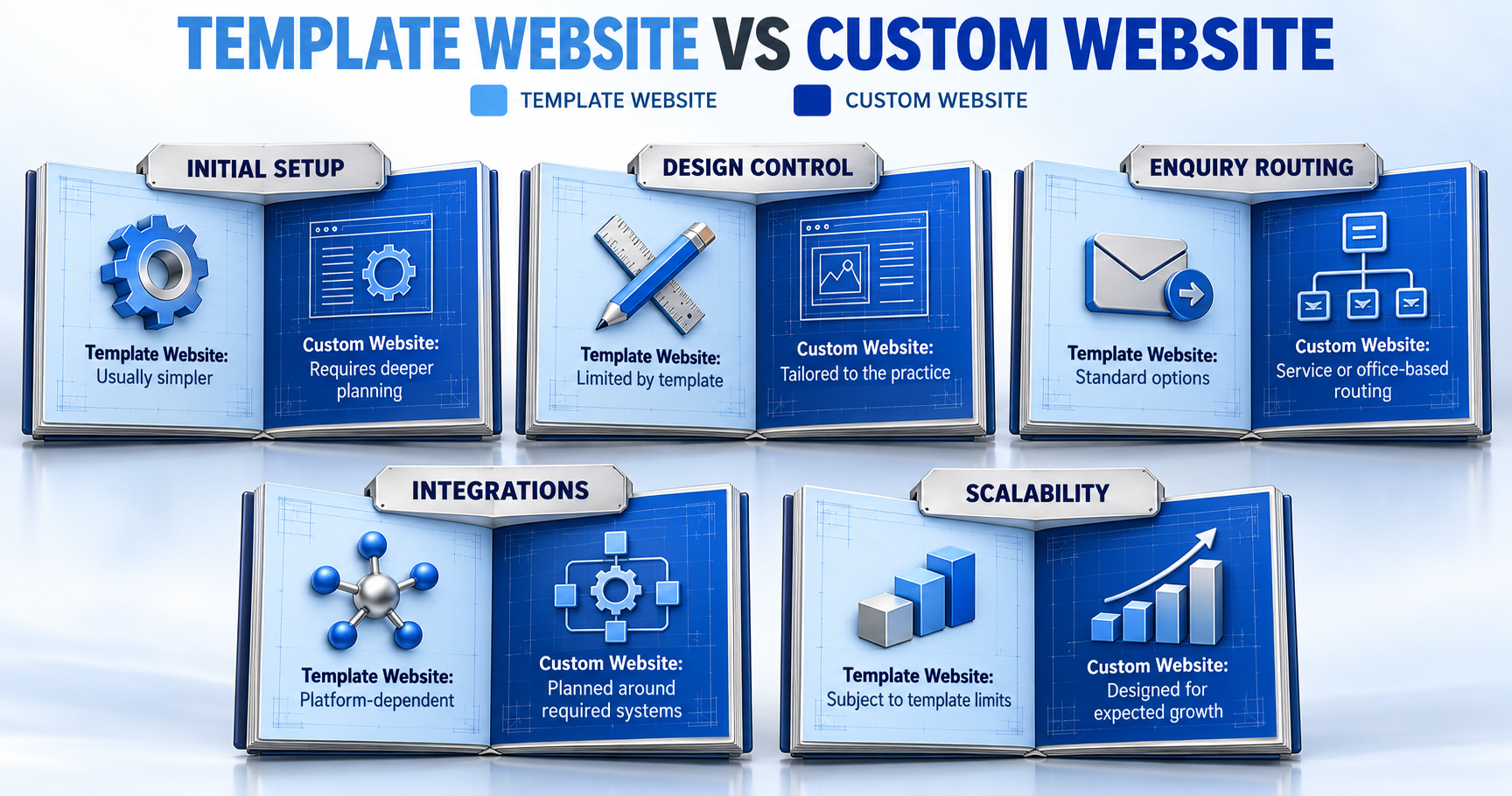
Neither approach is automatically superior. A well-configured template may meet a smaller firm’s needs, while a restrictive template can become costly as the practice expands.
A Practical Development Process
Discovery should document the firm’s services, clients, offices, professionals and connected systems. Existing URLs also need to be recorded when replacing a live website so redirects can preserve useful pathways.
Wireframes can then map movement between service pages, profiles, resources and contact forms. Content should develop alongside the design so professional claims and office details receive internal approval.
Development should take place in a protected staging environment. Forms, mobile layouts, portal links, redirects and analytics can then be tested without affecting the live accounting website.
Before launch, the practice should document approvals, backups, recovery arrangements and maintenance duties. Staff responsible for routine content also need appropriate training.
Costs and Timeframes
The cost of web design for accountants depends on scope rather than profession alone. A sole-practitioner website cannot be compared directly with a multi-office platform containing custom service content and enquiry routing.
Key variables include page count, content creation, template or custom design, migration, forms, accessibility, SEO redirects, hosting and maintenance. No verified accountant-specific project price or timeline has been supplied, so unsupported figures should not be published.
A written proposal should define deliverables, revision limits, responsibilities, exclusions and continuing costs. The development schedule should also show who supplies content and approves each stage.
Common Accounting Website Mistakes
| Mistake | Likely impact | Recommended fix |
|---|---|---|
| Combining all services on one page | Unclear visitor journey | Create focused service pages |
| Publishing unsupported claims | Reduced credibility | Use verifiable explanations |
| Requesting sensitive data publicly | Privacy and security exposure | Use a secure client system |
| Hiding office contact details | Abandoned visits | Provide clear local pathways |
| Leaving profiles outdated | Lower professional trust | Schedule content reviews |
| Ignoring maintenance | Broken forms or vulnerabilities | Assign technical ownership |
Frequently Asked Questions
What should an accountant’s website include?
An accounting website should explain services, introduce relevant professionals and provide accurate office information. Clear enquiry routes, privacy information and secure portal guidance may also be required.
Does an accounting firm need a custom website?
Not always. A suitable template can support a smaller practice with standard requirements. Custom development becomes more useful for multiple offices, tailored routing or advanced integrations.
How can an accounting website generate enquiries?
Focused service pages should answer client questions and lead to relevant contact actions. Each submission should retain its service or location context.
Should accountants publish prices online?
That depends on the engagement model. Published prices may suit standard packages, while complex work may require assessment. Any price should state its inclusions and limitations.
Should an accounting website collect financial documents?
A standard contact form should not request unnecessary financial records, passwords or tax file numbers. Sensitive files should use an approved secure portal.
Is local SEO important for accountants?
Local visibility can help clients identify nearby offices and professionals. Accurate location pages and consistent business details support this process.
How often should the website be reviewed?
Forms and contact information need regular checks. Professional profiles, services and financial articles should also have scheduled review dates.
Does an accounting website require maintenance?
Yes. Software, forms, backups, security controls and connected systems require monitoring to reduce disruptions and outdated information.
Conclusion
Effective web design for accountants combines credible service information, genuine professional evidence, responsive navigation and secure enquiry handling. Visual quality matters, but clients also need accurate information and an easy next step.
The strongest accounting websites reflect how clients make decisions. Visitors should be able to identify a suitable service, review the professionals involved and make contact without sharing sensitive information too early.
Accounting firms should also assign responsibility for content, enquiries and technical maintenance before launch. Clear ownership helps prevent broken forms, outdated profiles and neglected security tasks.
To discuss an accounting website, hosting, security or search requirements, contact IT Company Australia. The initial discussion can focus on the practice’s services, locations, systems and required client journeys.
