

A B2B buyer rarely makes a decision after viewing one advertisement or landing page. Buyers often review services, compare providers, examine evidence and involve several internal stakeholders before requesting a proposal. A business website must support this longer and more considered decision process.
Introduction
A polished homepage alone cannot meet that need. B2B visitors require useful service information, credible evidence and a clear explanation of how a provider solves specific business problems. They also need straightforward pathways for asking technical, commercial and procurement questions.
Choosing a B2B web design agency involves more than comparing visual portfolios. The agency needs to understand complex services, longer sales cycles, multiple decision-makers and the systems that manage leads after an enquiry arrives.
A strong B2B website connects research, user experience, content, development and lead management. It helps the right organisations assess suitability while discouraging irrelevant enquiries. The following seven essentials provide a practical foundation for Australian B2B websites in 2026.
What Is a B2B Web Design Agency?
A B2B web design agency plans, designs and develops websites for organisations that sell products or services to other businesses. Its work may cover information architecture, service pages, responsive design, content management, lead forms, CRM connections, analytics, security and post-launch improvement.
B2B website design differs from many consumer projects because the buying process often involves several roles. A technical evaluator, department manager, finance representative and senior decision-maker may each require different information before supporting the same purchase.
Professional website design and development should therefore begin with the audience, buying journey and commercial goals. IT Company Australia’s website design service describes a process covering discovery, wireframing, responsive development, integration, testing and post-launch support.
Direct Answer: What Should a B2B Web Design Agency Deliver?
A capable B2B web design agency should deliver a fast, accessible and credible website structured around real buying journeys. The platform should explain complex services, answer stakeholder questions, capture useful enquiry context and connect with the organisation’s sales, marketing and reporting systems.
In This Guide
You will learn how a B2B website should:
- Support different decision-makers and buying stages
- Explain complex services without overwhelming visitors
- Build trust with verifiable business evidence
- Capture and route qualified enquiries
- Remain secure, measurable and maintainable after launch
Why a B2B Web Design Agency Matters
B2B buyers usually arrive with a business problem rather than a desire to explore creative website design. The website must show that the organisation understands that problem, offers a relevant solution and can support the expected level of complexity.
Generic layouts often fail because they treat every visitor in the same way. A chief financial officer may focus on commercial risk, while an operations manager may need implementation details. A technical stakeholder may look for security, integration or support information.
A specialist agency can map those information needs before designing pages. This work helps prevent a common failure: building an attractive website that does not answer the questions required for internal approval.
The website should also support sales conversations rather than attempt to replace them. Clear content can prepare prospects, reduce repeated questions and help a sales team begin with better context.
The 7 Essential B2B Website Requirements
The following requirements address the full B2B website journey, from initial research to qualified enquiry and post-launch management. Each element should reflect the organisation’s real services, sales process and operational capacity.
1. Align the Website With the B2B Buying Journey
A B2B website should support awareness, consideration and decision stages without forcing every visitor directly towards a sales call. Early-stage visitors may need educational material, while decision-stage prospects may want implementation details or a proposal.
The project should identify the roles involved in each purchase. Marketing, operations, IT, procurement and executive stakeholders can have different concerns, even when they are evaluating the same service.
Page architecture should reflect those needs. Service pages can explain capabilities, industry pages can provide context, and case studies can show relevant applications. FAQs, process pages and technical resources can address practical objections.
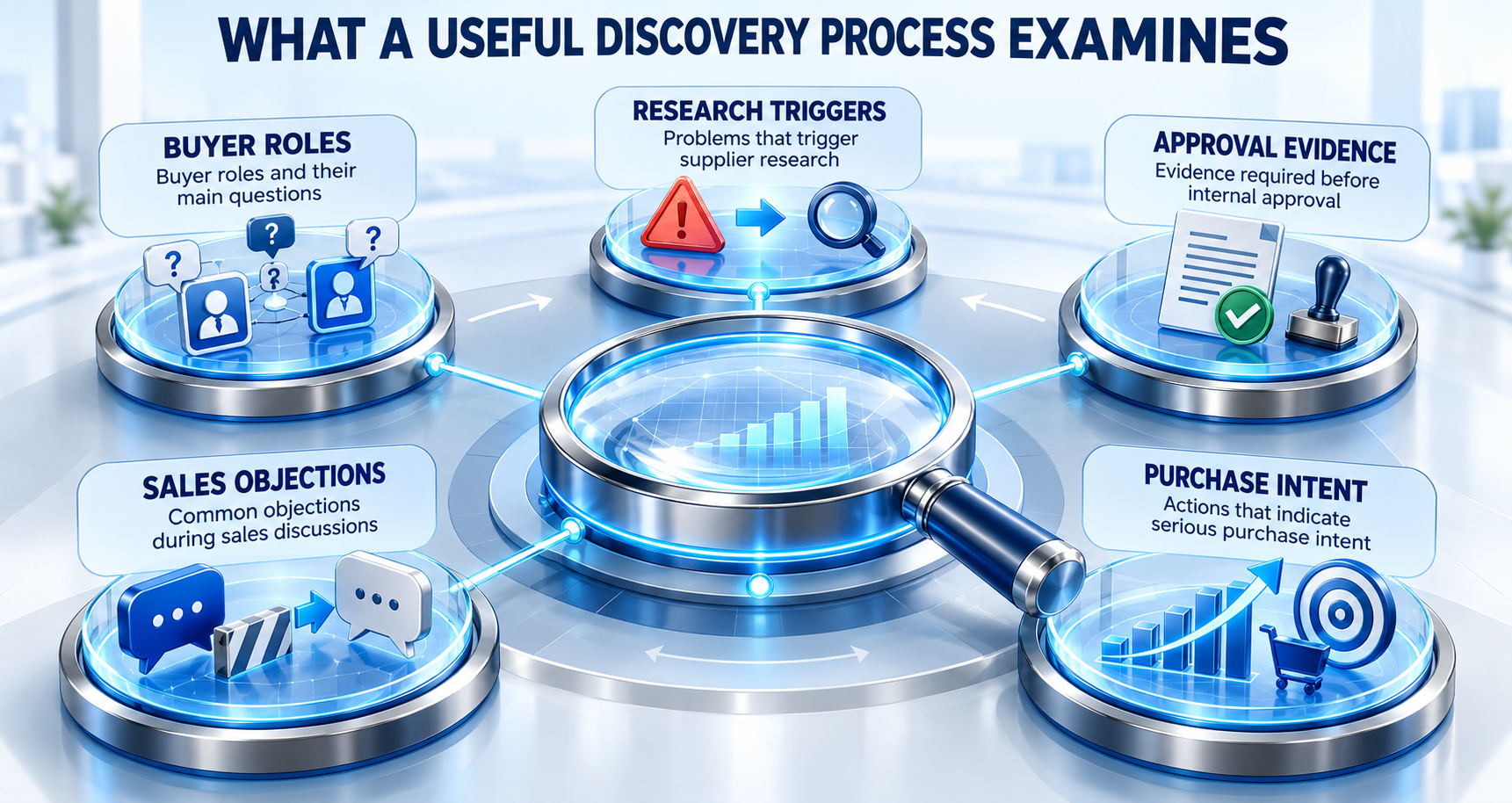
This structure prevents the homepage from carrying every message. It also gives prospects several logical ways to explore the business without becoming lost in a large navigation menu.
2. Explain Complex B2B Services Clearly
B2B organisations often use internal terminology that customers do not immediately understand. A website should translate specialist knowledge into clear business language without removing the technical detail needed by informed buyers.
Each priority service needs a focused page explaining the problem, suitable customer, scope and engagement process. A brief overview can support early research, while specifications, integrations or delivery information can appear further down the page.
Clear service architecture also supports organic visibility. A page about managed IT services should not duplicate a page about cloud management or cybersecurity. Each page needs a distinct purpose and corresponding visitor need.
An Australian SEO services strategy can support keyword research, technical structure and content planning. Search optimisation should reinforce useful service information rather than turn each page into a collection of repeated keywords.
The article about website design services in Australia provides additional context on strategy, user experience, performance and search readiness. Website Design Services in Australia: High-Performing Websites covers discovery, information architecture, responsive design, development and optimisation.
3. Build Credibility With Verifiable Evidence
B2B buyers need evidence that reduces perceived risk. Generic statements such as “industry-leading solutions” or “unmatched quality” provide little help unless the organisation can support them with specific facts.
Credibility may come from relevant case studies, verified certifications, detailed team profiles, partner relationships or clearly documented processes. Only evidence that can be checked and kept current should appear on the website.
Case studies work best when they explain the initial problem, chosen approach and verified result. When a measurable outcome cannot be disclosed, the organisation can still explain the project scope and delivery method without inventing performance claims.
Brand presentation also affects credibility. Consistent typography, colours, diagrams and document layouts help the organisation appear coordinated across the website, proposals and sales material.
Businesses updating both their website and identity can review graphic design and branding services. The visual system should support the B2B positioning rather than distract from service information.
4. Design for Accessibility and Mobile Research
B2B research does not happen only at a desktop. A decision-maker may review a supplier on a phone, forward a service page or revisit a case study between meetings. Important content must remain readable and functional across different screens.
Responsive design should protect the hierarchy of each page. Headings, proof points, service details and contact actions need enough space, while complex diagrams should remain understandable without excessive zooming.
Accessibility also improves the experience for a wider range of visitors. Clear link wording, keyboard navigation, visible focus states, labelled forms and sufficient colour contrast should form part of design and testing.
| Website element | B2B visitor need | Design response |
|---|---|---|
| Service navigation | Find a relevant capability quickly | Group services by customer problem |
| Technical content | Assess suitability and risk | Use headings, diagrams and plain language |
| Case studies | Verify relevant experience | Present problem, approach and result |
| Mobile pages | Research between meetings | Preserve hierarchy on smaller screens |
| Enquiry forms | Ask a specific question | Use short, contextual forms |
| Accessibility | Navigate content reliably | Test labels, contrast and keyboard access |
Testing should cover real devices, not only resized desktop windows. The team should evaluate menus, forms, downloads, comparison tables and interactive elements at common mobile widths.
5. Create Qualified Lead Journeys
A B2B website should not treat every conversion as equal. A newsletter subscriber, technical question and proposal request represent different levels of intent and should not enter the same follow-up process.
Each priority page needs an action that fits its content. An educational article might lead to a related guide, while a detailed service page may offer a consultation or requirements discussion.
Forms should request enough information to route the enquiry without creating an unnecessary barrier. Name, business email, organisation, service interest and a short requirements field may provide sufficient initial context.
A suitable email marketing and CRM service can help organise follow-up and support segmented communication. The website and CRM should agree on field names, consent wording, ownership and lead-routing rules before integration begins.
Confirmation pages also deserve attention. They should acknowledge the enquiry, explain the next step and offer a relevant resource without promising a response period the business cannot consistently meet.
6. Plan Performance, Hosting and Security Together
A visually strong B2B website can still fail when pages load slowly, forms stop working or hosting cannot support traffic. Performance should therefore influence image preparation, content components, code and third-party integrations from the beginning.
The hosting environment needs to suit the platform, expected traffic, backup requirements and administrative model. Businesses can review web hosting services while defining those technical requirements.
Security planning should cover administrator access, software updates, form protection, backups and recovery. Additional website security and protection may be appropriate when the organisation requires malware scanning, application checks or ongoing monitoring.
Important technical controls include:

The sales and marketing teams should know who owns each control after launch. A security tool offers limited protection if alerts go to an unmonitored mailbox or nobody has authority to respond.
7. Establish Measurement and Ongoing Improvement
A B2B website should be measured against business actions rather than page views alone. Useful signals may include qualified consultation requests, service-page engagement, resource downloads and progression from content to enquiry.
Analytics events need clear names and documented purposes. The team should distinguish between minor engagement, marketing-qualified activity and actions that require direct sales follow-up.
Website content also needs ongoing review. Services change, team profiles become outdated and external tools alter their requirements. Technical updates can affect forms, page speed or integrations without obvious visual signs.
A website maintenance service can support software updates, backups, performance checks and routine monitoring. The related guide to website maintenance and business growth explains common maintenance tasks and the risks of neglecting them. Website Maintenance: Protect, Optimize, and Grow discusses CMS updates, security checks, backups, broken links and performance monitoring.
What a Practical B2B Website Process Looks Like
Discovery should define the commercial goal, buying roles, services, content needs and connected systems. Existing analytics, sales questions and customer feedback can provide useful inputs when available.
Wireframes then map navigation, page hierarchy and conversion paths. This stage should resolve structural questions before visual design makes changes slower and more expensive.
Design applies the organisation’s identity to approved layouts. Development follows in a protected staging environment, where the team can test responsive behaviour, content management, forms and integrations.
Before launch, the agency and client should check redirects, analytics, accessibility, forms, backups and security settings. Internal users also need training for the content tasks they will own.
Template or Custom B2B Website?
A template can suit a smaller B2B organisation with straightforward services and limited integration needs. The decision should consider content flexibility, accessibility, speed, licensing and long-term ownership rather than appearance alone.
Custom development may suit organisations with complex navigation, several divisions or specialised CRM workflows. It offers greater control but requires deeper discovery, testing and documentation.
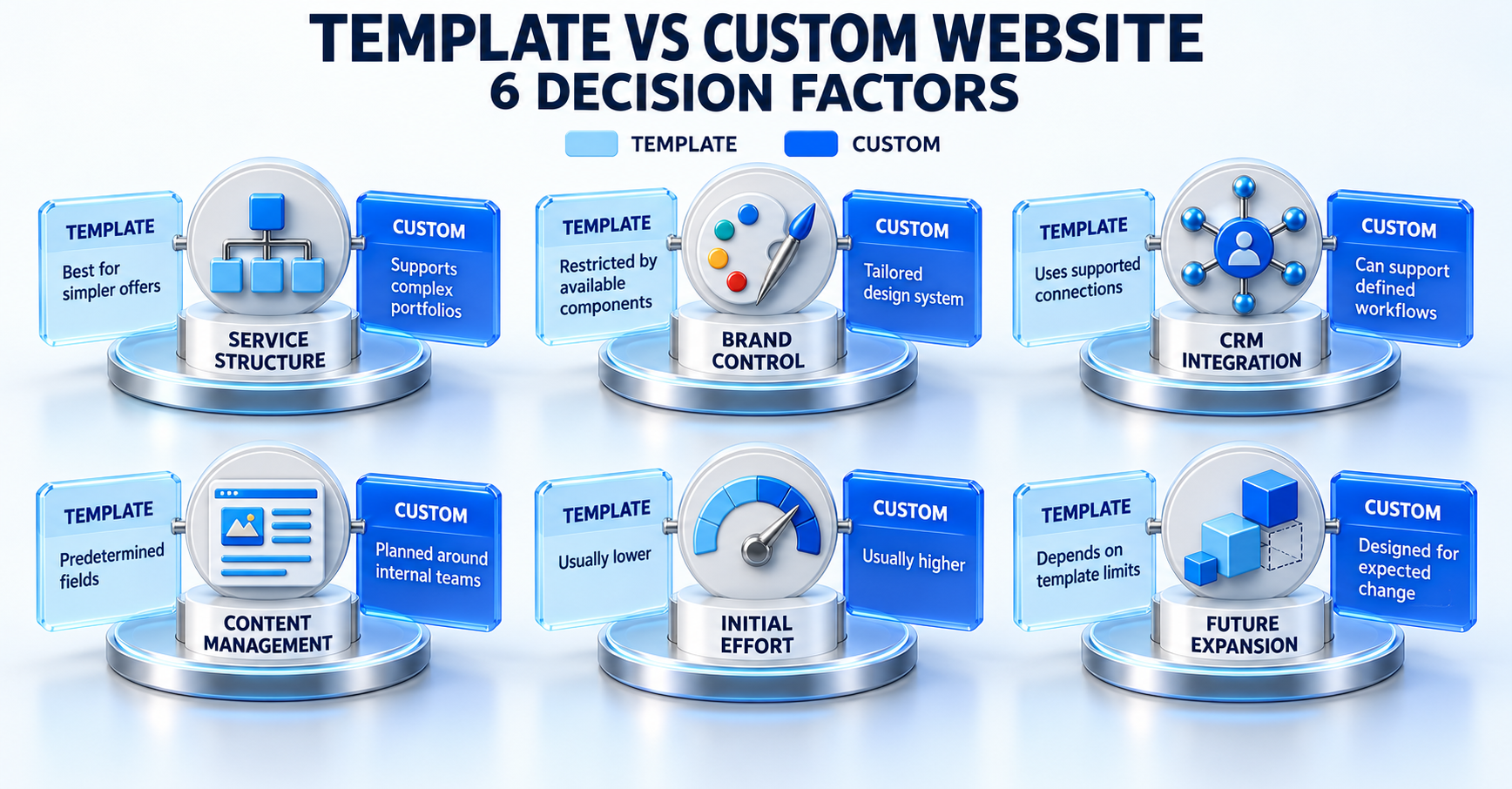
Neither approach guarantees a successful website. A focused template can outperform unnecessary custom development, while a restrictive theme may create expensive workarounds as the organisation grows.
Costs, Timeframes and Project Risk
B2B website costs depend on scope, content, integrations and governance. A compact professional-services website cannot be compared directly with a multi-division platform containing custom calculators, CRM workflows and gated resources.
No verified B2B-specific project price or fixed timeframe appears on the reviewed company pages. A written proposal should therefore define discovery, design, development, testing, migration, revisions and ongoing support instead of relying on an unsupported figure.
Content approval often creates more delay than development. Organisations should identify who verifies technical claims, approves legal wording and signs off the project before setting a launch date.
Risk also increases when integrations remain undefined. CRM documentation, form fields, consent requirements and ownership rules should be available before an agency estimates the related work.
Common B2B Website Mistakes
Designing Around the Company Structure
An internal department chart rarely matches the buyer’s thought process. Navigation should reflect customer problems and purchase questions rather than the organisation’s reporting lines.
Using Generic Service Copy
Broad claims make competing providers sound similar. Specific descriptions of scope, process and suitable customers make the offer easier to evaluate.
Treating Every Enquiry the Same
A technical support question differs from a proposal request. Contextual forms and defined routing rules help the appropriate team respond.
Hiding Important Evidence
Certifications, case studies and delivery information should appear near relevant claims. Visitors should not need to search several pages to verify credibility.
Launching Without Redirects
A redesign can change URLs and create broken links. Important existing pages should map to relevant new destinations before launch.
Ignoring Post-Launch Ownership
Websites deteriorate when nobody owns content, forms or updates. Maintenance responsibilities and escalation paths should be documented before launch.
Quick Facts
| Question | Direct answer |
|---|---|
| Who needs this approach? | Professional, technical and corporate B2B organisations |
| What is the main goal? | Support research and generate qualified enquiries |
| Which content matters most? | Services, evidence, processes and technical information |
| Where should planning begin? | Buyer roles, business goals and sales workflows |
| When should SEO begin? | During structure and content planning |
| Template or custom? | Choose according to complexity and future growth |
| What affects cost? | Scope, content, integrations, migration and support |
| What is the main risk? | A polished website that fails to support buying decisions |
Frequently Asked Questions
What does a B2B web design agency do?
A B2B web design agency plans and builds websites for organisations selling to other businesses. Its work may include research, content structure, responsive design, development, CRM connections, analytics, security and maintenance.
How is B2B website design different from B2C design?
B2B websites often support longer buying journeys, several decision-makers and more complex services. Content must answer commercial, operational and technical questions while helping prospects build internal support.
How long does a B2B website take to build?
Timing depends on page count, content readiness, stakeholder approvals and integrations. A written project plan should show discovery, design, development, testing and launch stages rather than promising one standard timeframe.
How much does a B2B website cost?
Cost depends on design, content, development, integrations, migration and ongoing support. Compare detailed scope, ownership, revision limits and maintenance obligations instead of relying only on the headline price.
Should a B2B website use a template?
A template may suit a smaller organisation with straightforward services. Custom development may be more appropriate when the project involves complex navigation, differentiated content or specialised system integrations.
Does a B2B website need CRM integration?
Not every project needs a complex integration. CRM connectivity becomes useful when the business needs reliable lead context, ownership, segmentation, follow-up and reporting.
How can a B2B website generate better leads?
The website should define its audiences, publish focused service content and provide contextual conversion paths. Forms should collect enough information to route serious enquiries without creating unnecessary friction.
Does a B2B website require ongoing maintenance?
Yes. Software, forms, content, integrations, backups and security controls require regular attention. Maintenance reduces the chance of outdated information and unnoticed technical failures.
Conclusion
A capable B2B web design agency should understand more than layouts and colour choices. The agency must translate complex services into clear content, support multiple decision-makers and create useful paths from initial research to qualified enquiry.
The strongest B2B websites combine service architecture, credible evidence, responsive design, lead routing, security and ongoing measurement. Each element needs a clear business purpose and an owner after launch.
Businesses should define their audiences, sales process, content responsibilities and technical requirements before requesting final estimates. This preparation makes proposals easier to compare and reduces avoidable changes during development.
To discuss a B2B website’s structure, integrations, security or maintenance requirements, contact IT Company Australia. The initial conversation can focus on business objectives and practical requirements rather than a predetermined package.
